
Penrhyn Particulars
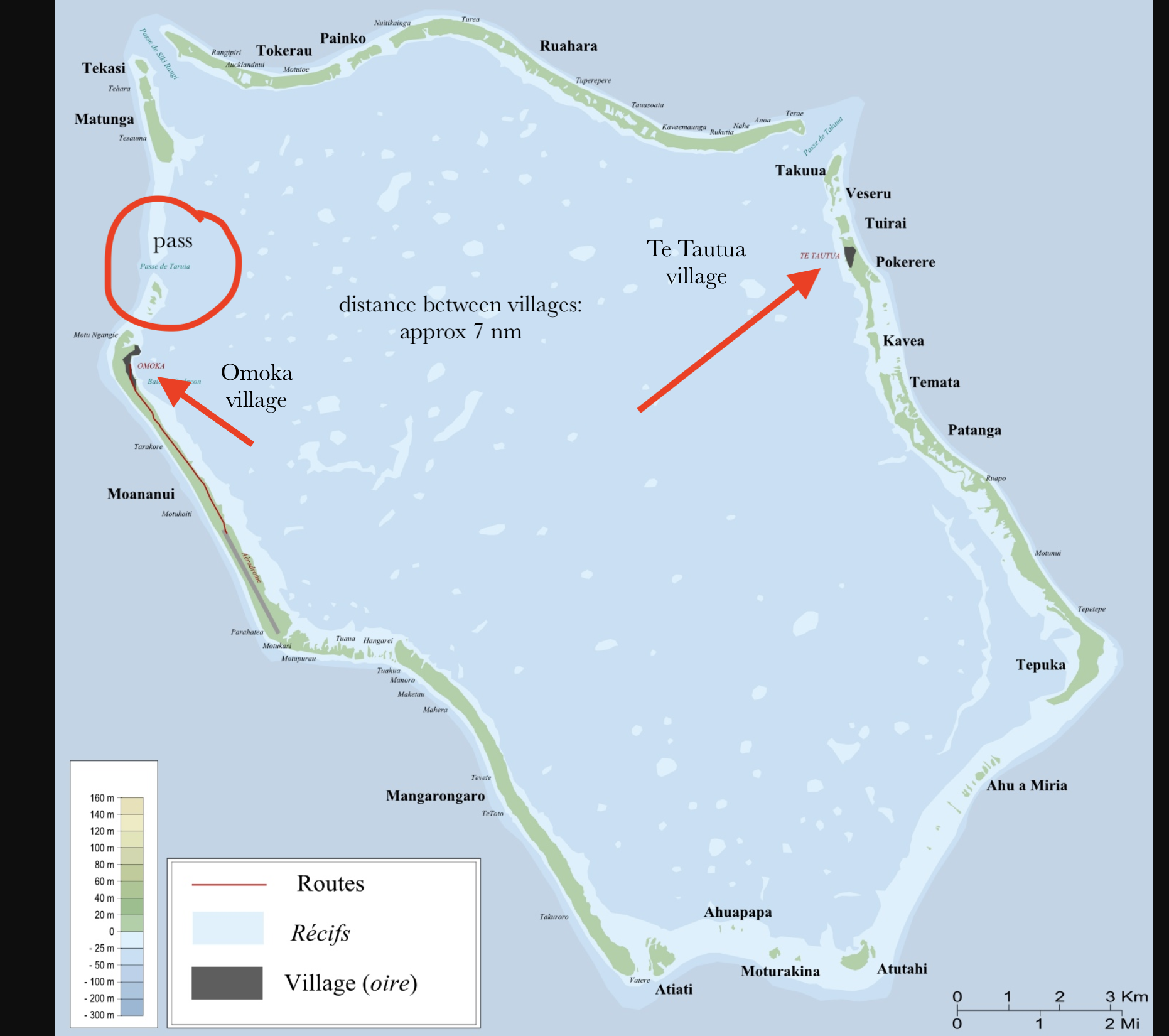
Map from Ontheworldmaps.com
BASICS:
Flag: Cook Islands flag
Language: Cook Islands Maori; most people also speak English
Currency: New Zealand Dollar
Fees in 2026: (in NZD) TO BE PAID IN CASH
(Note: there is no credit card machine, no ATM, and the bank cannot exchange money.)
Biosecurity: 20
Customs: 60
Public Health: 20
Entry fee: 20
Anchoring fee: 2.50/day
Exit fee: 82 per person
Permitted anchorages:
Omoka (on the west side of the atoll)
Te Tautua (on the east side of the atoll)
Visa:
31 day stay automatically granted on entry
Access to fresh fruits/vegetables:
Essentially non-existent. Bring what you need with you. The island is visited by up to 3 supply ships a year.
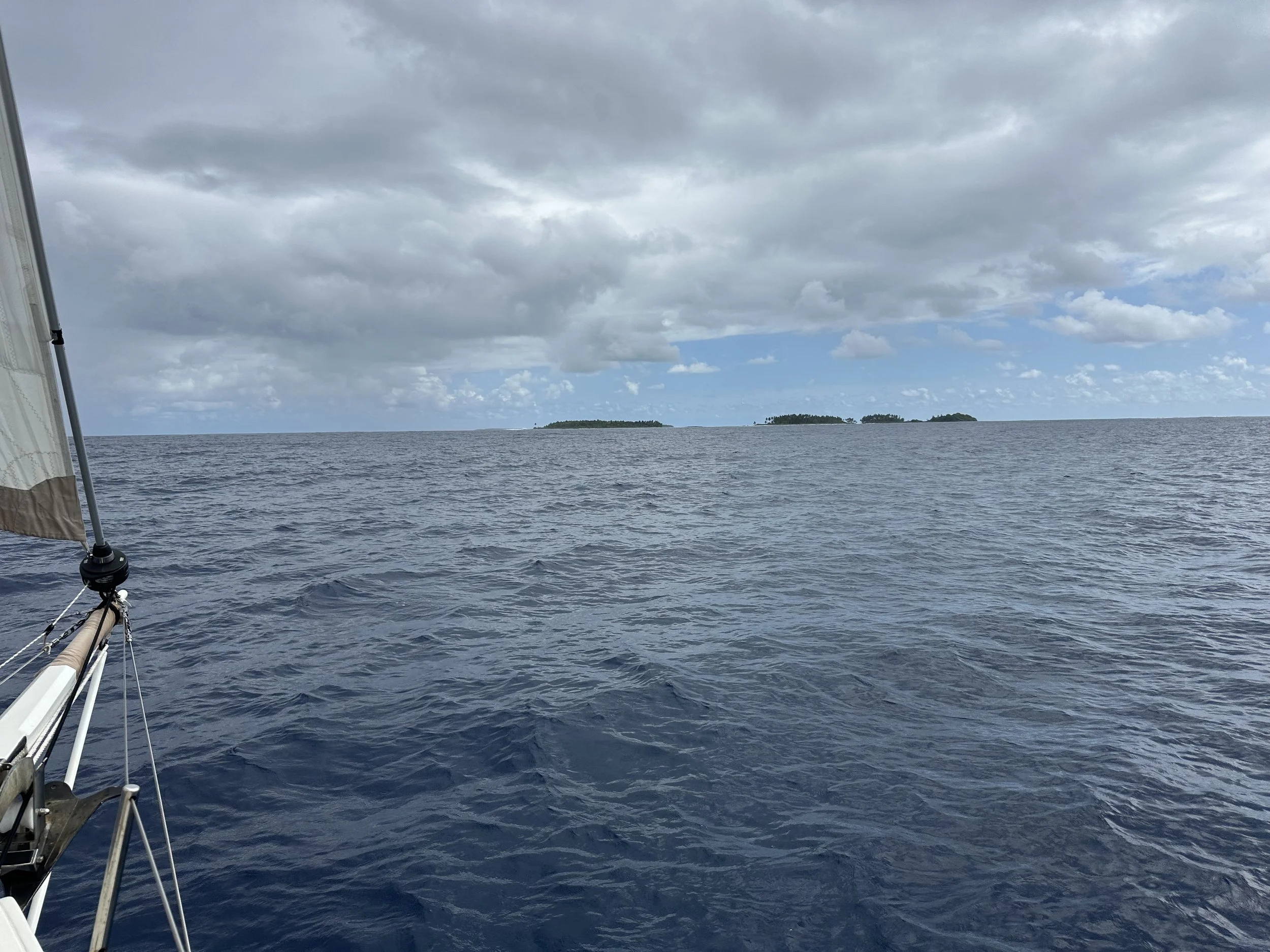
Land ho!
From Bora Bora, we sailed to Penrhyn, the northernmost of the official entry ports for the Cook Islands. After 15 months in French Polynesia, the q-flag was finally getting used once again!
View out the galley port sailing to the Cook Islands
Penrhyn is about 500 nm north-northwest of Bora Bora, and is enough out of the way that not many cruisers get there in a given year. There is also the matter of clearance fees . . .
There is no ATM on the island, and the bank is unable to exchange any kind of foreign currency. If you don’t have New Zealand dollars, the officials are very happy to let you pay with USD or Euros. On a 1:1 exchange rate.
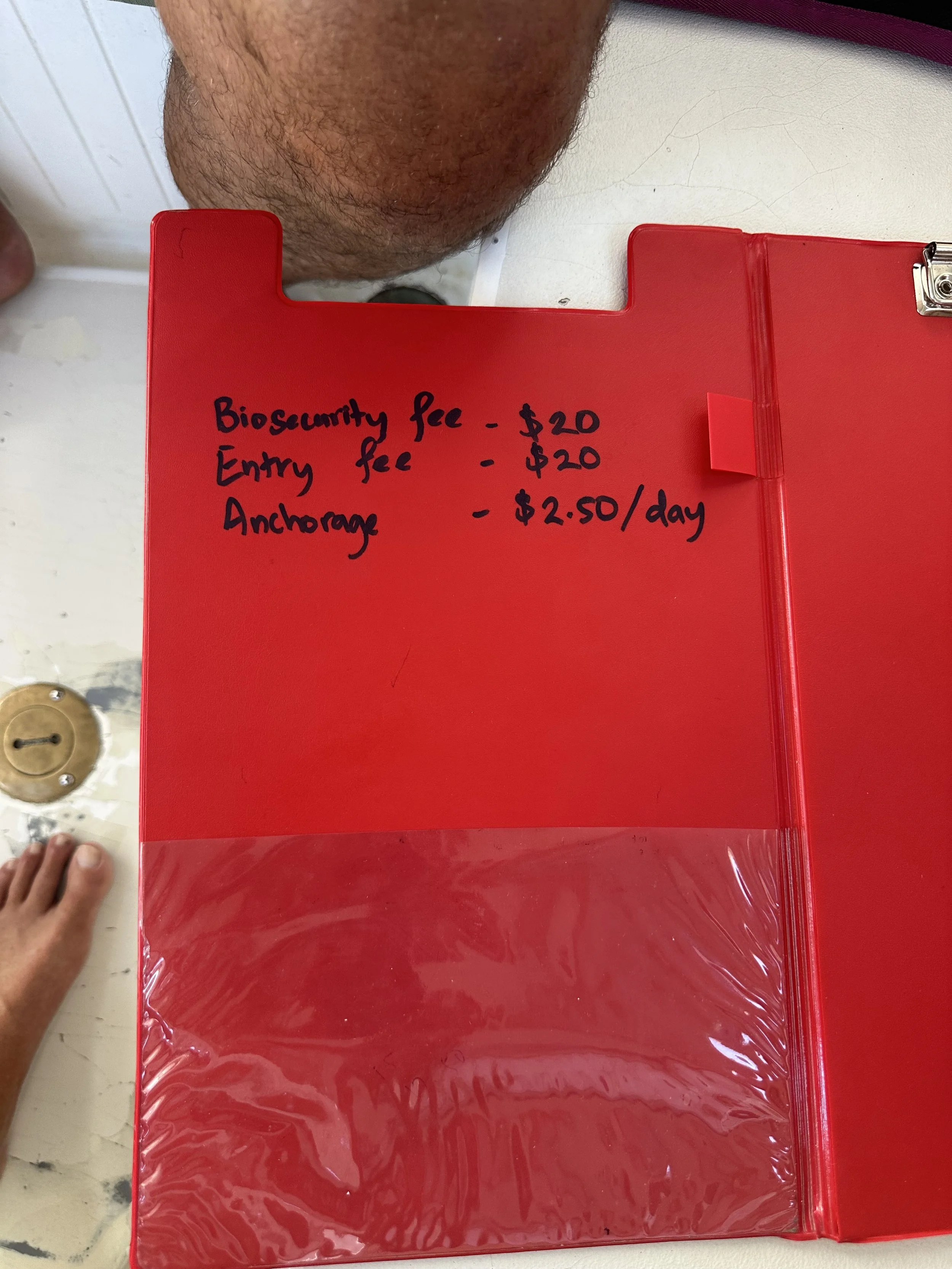
Official fees, written inside George’s folder.
These fees, with the exception of the anchoring fee, are the same no matter which of the entry ports you go to in Cooks - Aitutaki and Rarotonga being the other ones. The difference in either Aitutaki or Rarotonga is that there is an ATM nearby where you can get your hands on local currency, or the banks will exchange money for you.
Note: your visa is good for 31 days, and apparently can be extended (very expensively) only via Rarotonga. Keep an eye on the calendar!
A lot of cruisers who choose to go to the Cook Islands opt for Aitutaki or Rarotonga, with the vast majority aiming for Aitutaki. This puts you on a more central line from French Polynesia to Tonga, with the added incentive of a stop in Niue - as long as the weather cooperates. A drawback in our minds is the harbors, rough cuts which require Med moor anchoring, where you drop the hook in the harbor and back up to the concrete wharf where you tie up, in the case of Aitutaki tying to a bollard that’s across a road. You need really long lines, nerves of steel, and a lot of really good chafe gear. At least in the case of Penrhyn, you anchor in nice sand in good protection (as long as the wind is out of the east).
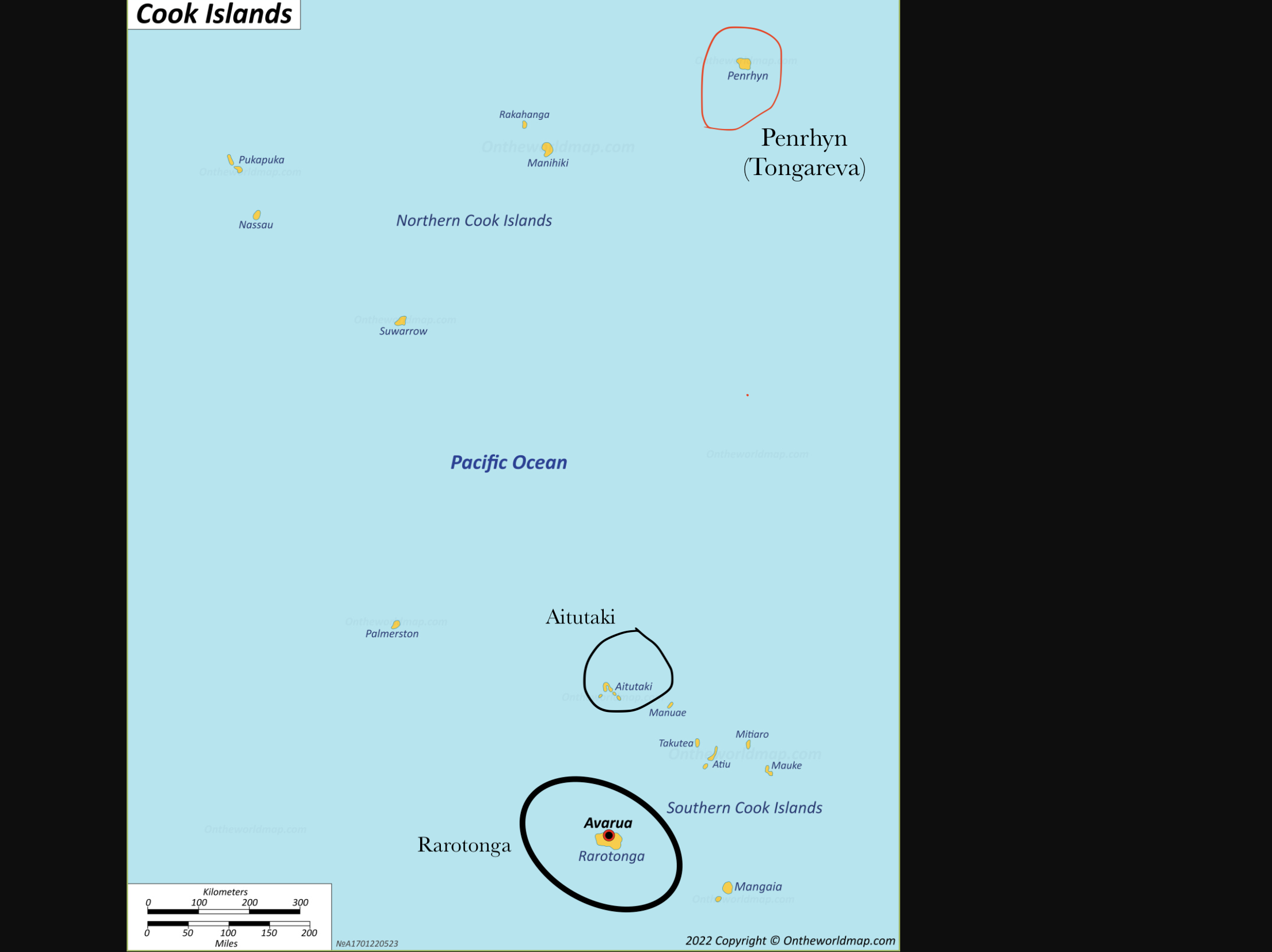
Base map from ontheworldmaps.com
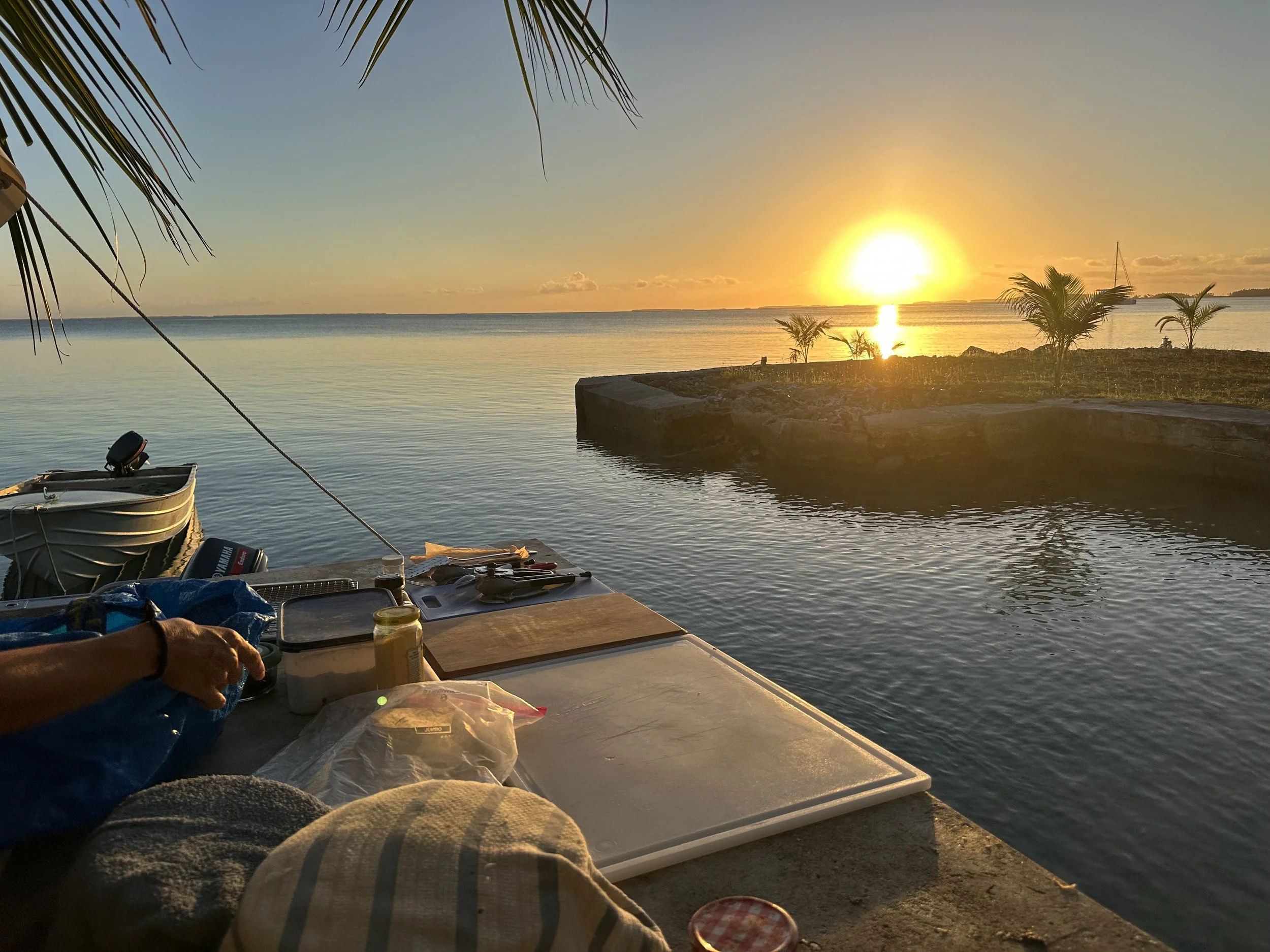
Looking out to the anchorage from Kura’s spot, Makae’s mast visible
We are also drawn to places where fewer people go . . .
Penrhyn wasn’t even on our radar screen initially. Then friends on In Cahoots shared their diagram of Bora Bora to Penrhyn to Suwarrow to Niue, and the idea got really interesting in a hurry.
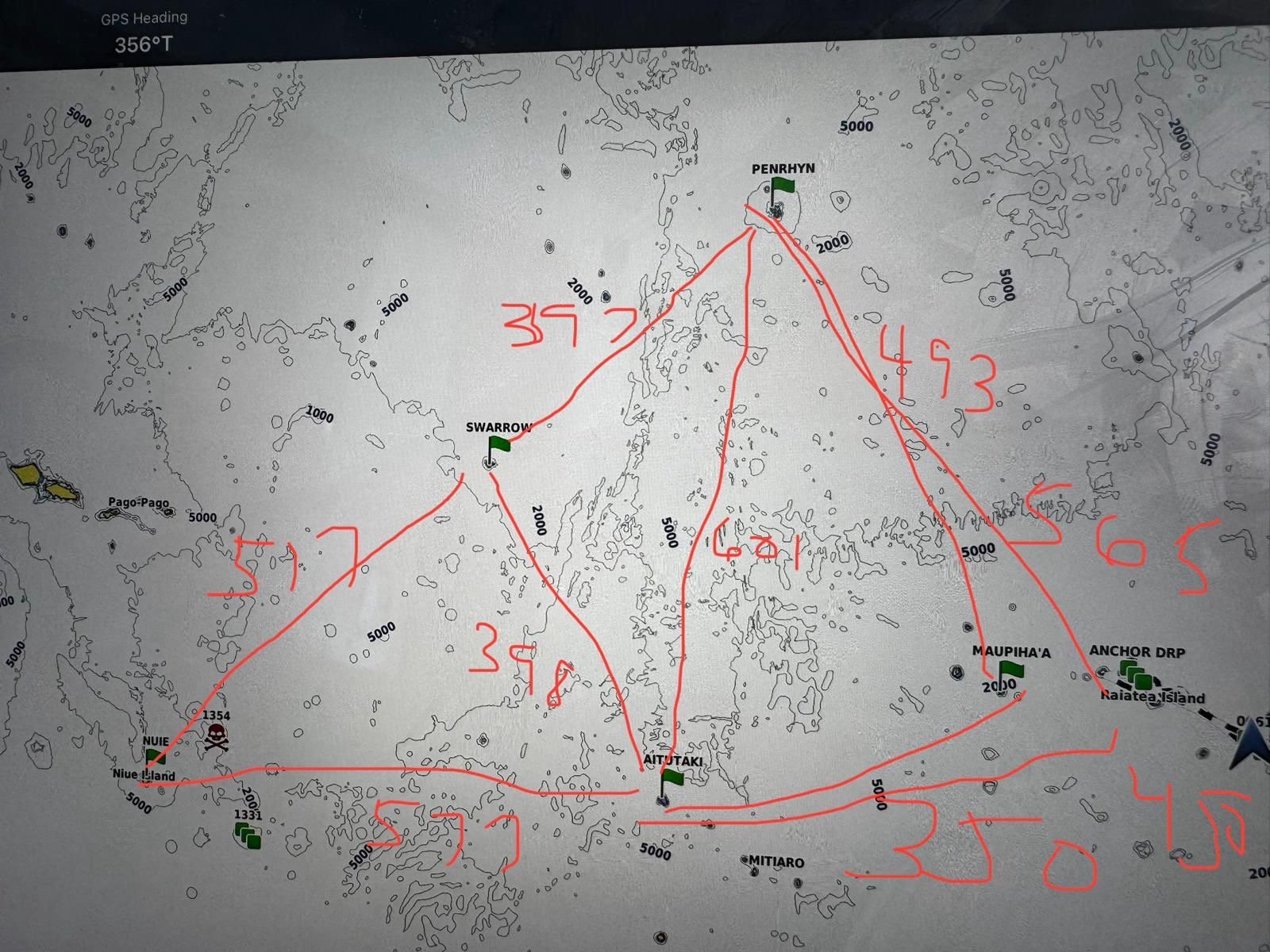
Chart from In Cahoots that got us thinking . . .
If you think you might want to go to Penrhyn, start thinking about it early. Like REALLY EARLY. The only place to exchange money (either xPF to USD or something to NZD) in French Polynesia is in Tahiti, and some people ran into issues needing to show a plane ticket to be able to buy NZD even at the exchange spot there. Banks won’t change money unless you have an account. ATMs spit out xPF. If you’re using USD to pay those Penryhn fees, you will need almost $300, more if you are staying longer. That’s more US cash than we usually have on hand . . .
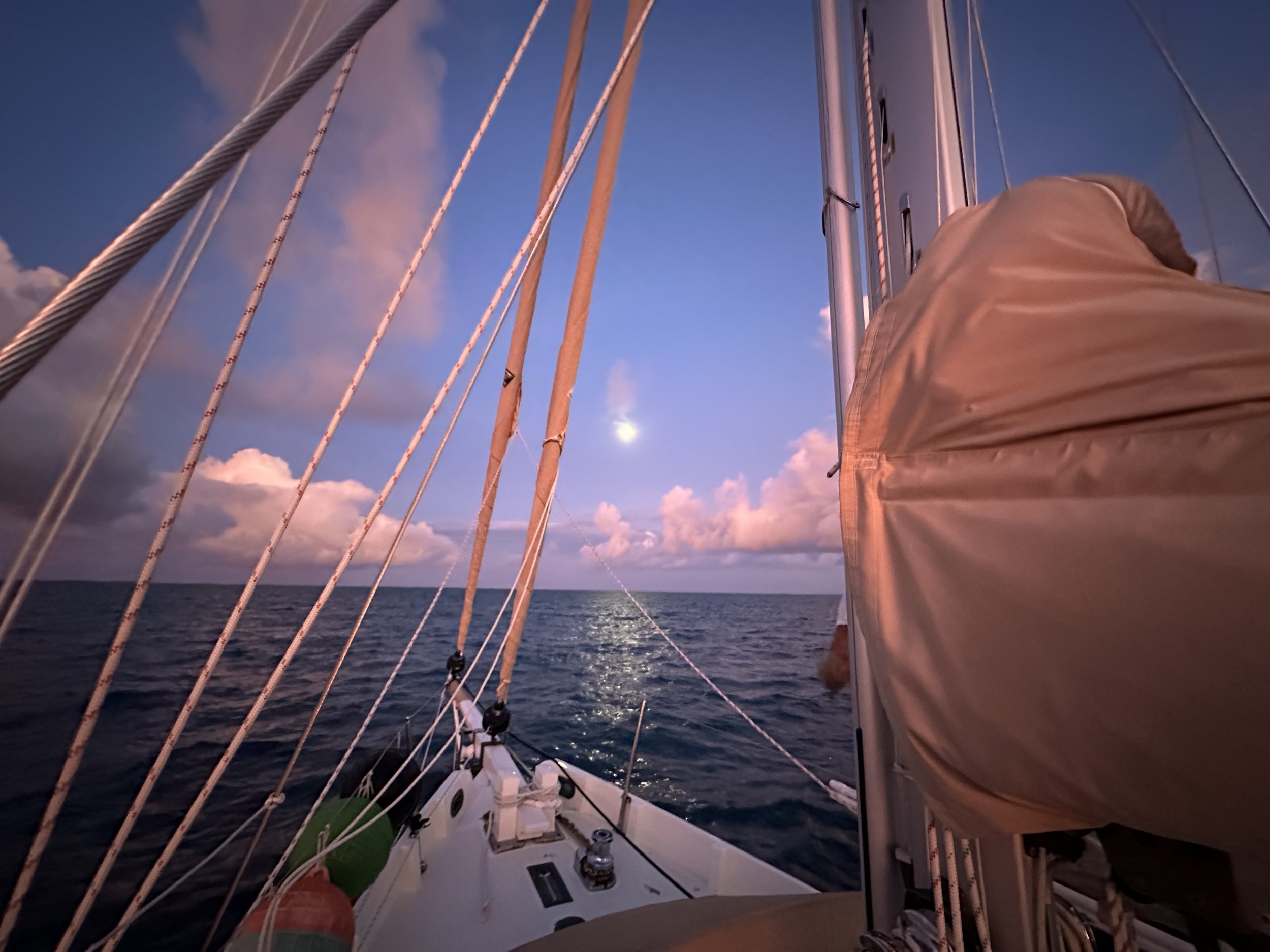
First night at anchor, Omoka
Friends had been in Penrhyn with another boat that arrived with nothing. As in, not even food. They’d need to buy one of the bags of rice and flour that the shop carries - the 25 KILO size - and they wound up working with someone to transfer money and wound up with NZD.
So Jeremy sent off a note to Puna, the island administrator, letting him know of our predicament. And VICTORY! Puna was very happy to have us transfer money into his account, and he’d withdraw it in NZD and hand it over to us on arrival.
Wise account for the win!
There are 2 villages on Tongareva. Omoka, the port of entry, sits right near the pass on the western side of the atoll. The harbor is very exposed to usual wind direction; it’s also deep and absolutely littered with coral heads. Limiting time there from an anchorage perspective is a good plan, but sometimes it’s a matter of clearance formalities.
Official hours are 8-4, M-F; they will occasionally clear you in on Saturday but Sunday is a pretty strict no work day. Three officials come in 2 different boats, with customs and public health arriving together and biosecurity as a solo visit.
Note: Biosecurity asked us to write down what fruits and veg and meat we had on board, told us to keep it on the boat, and took nothing. There is nowhere on Penrhyn where you could buy anything fresh, so it was nice to be able to eat what we had brought.
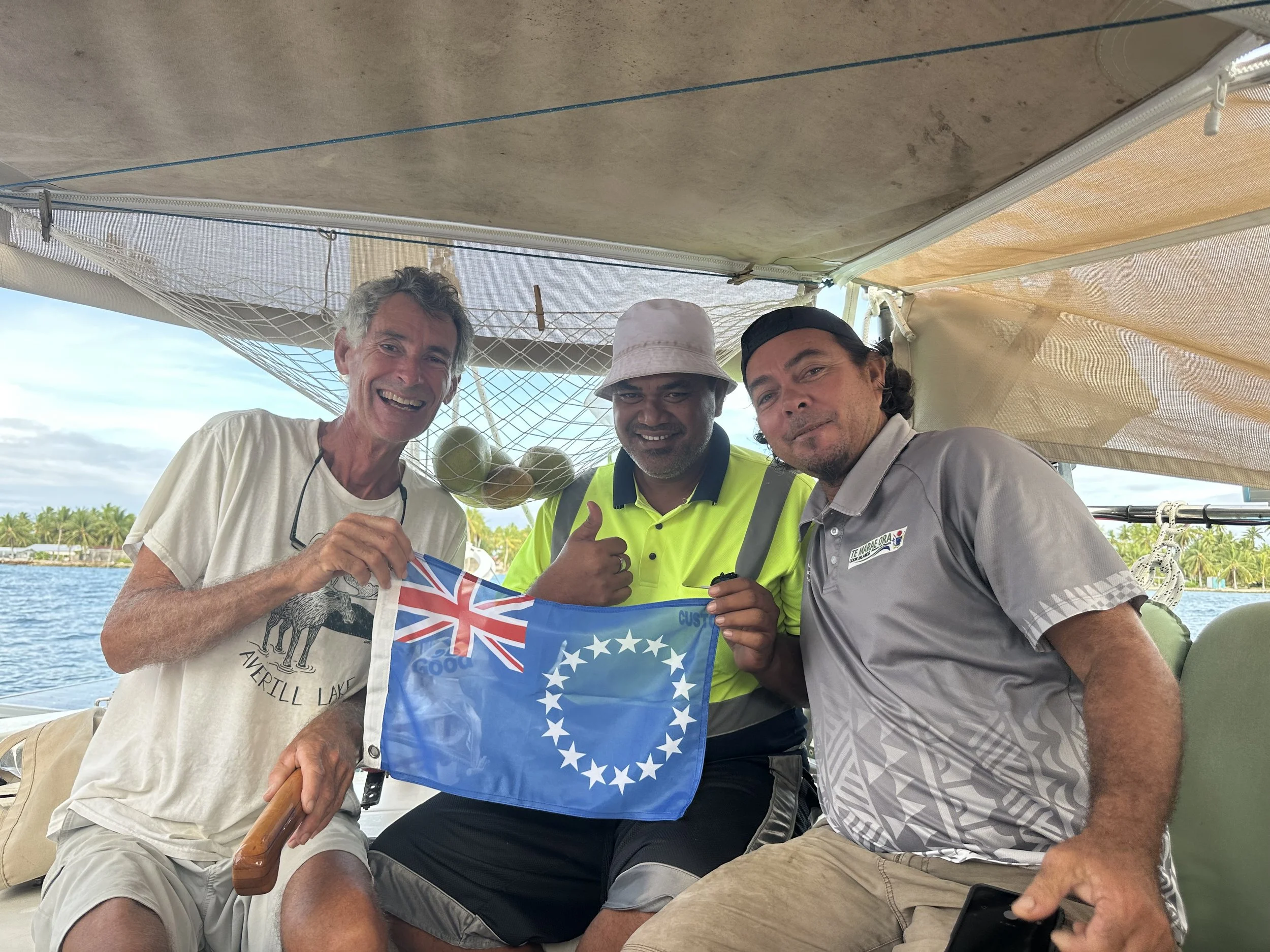
Tuku and Andrew were happy to welcome us to their home! Note the Cook Islands flag . . .
In our case, we arrived into calm conditions around noon on Friday, and by 2 pm George, the biosecurity officer, had come to clear us in. Tuku and Andrew (customs and public health) arrived promptly at 8 on Saturday morning, and once formalities had been concluded they posed for a photo as Jeremy held up the Cook Islands flag. Almost immediately after they left, we pulled up the anchor to head across the lagoon to Tautua. Strong winds were forecast and we were looking forward to dropping the hook in sandy, protected waters.
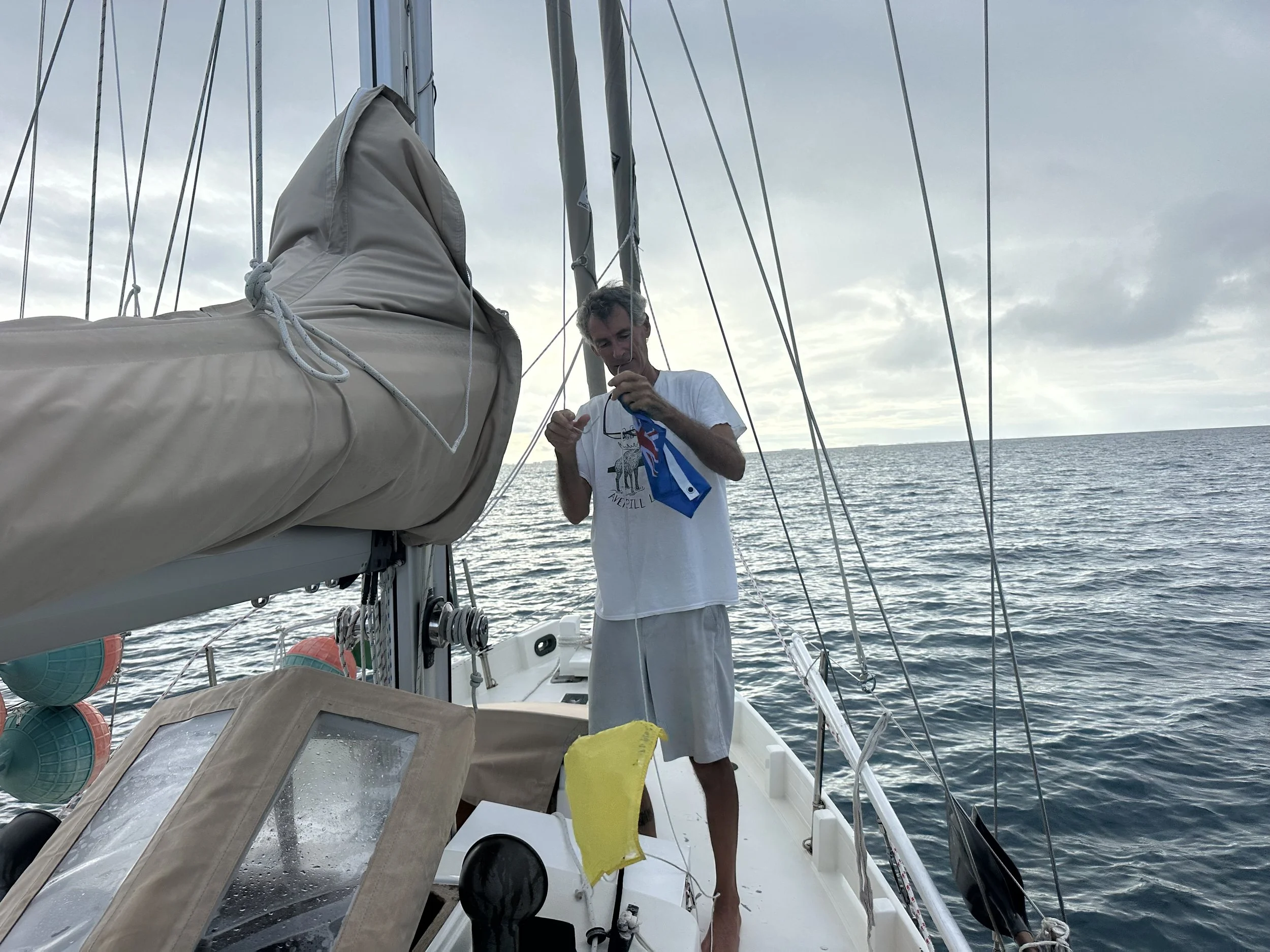
Q-flag down, Cook Islands flag going up.
We wound up staying right up until the end of our visa timing, clearing out right at 31 days. We could easily have stayed longer.
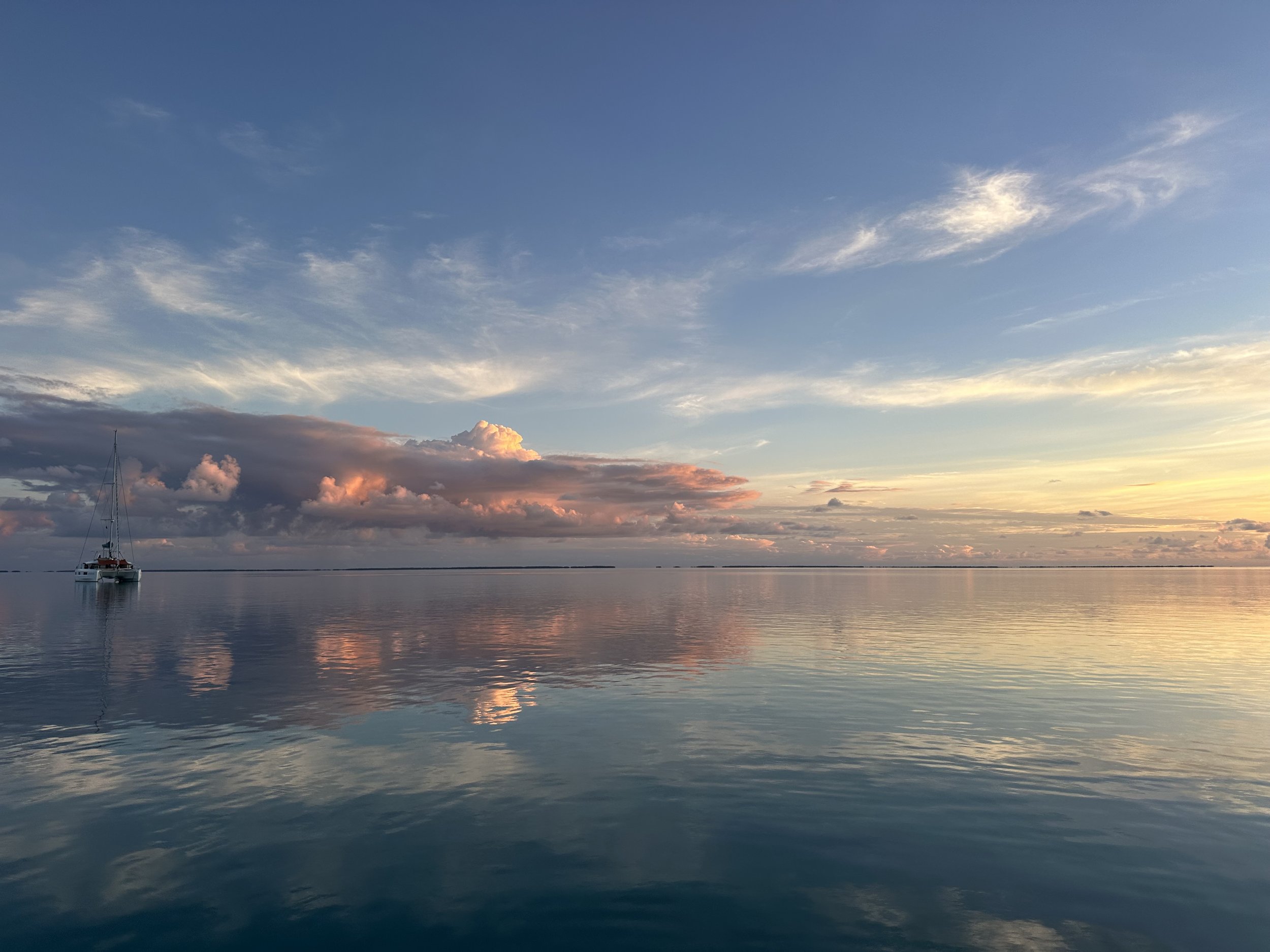
One calm evening in Tautua, our friends on Makae to the left