
BBQ, Gambiers-style
The call went out on the WhatsApp group a month or so before we even got to the Gambiers. “Earth oven traditional pig roast, to celebrate Hervé’s and Valerie’s son being home for a couple of months. 2500 Xpf/person.” Our reply was an immediate YES!
Hervé and Valerie are well-known and much loved cruiser-friendly Mangarevans. They own a beautiful bit of land on Taravai and have traditionally welcomed cruisers to their home for occasional potluck barbecues. They speak English, sell some produce, and make it a mission to make life a little more fun for the sailors who find their way to this incredible corner of French Polynesia.
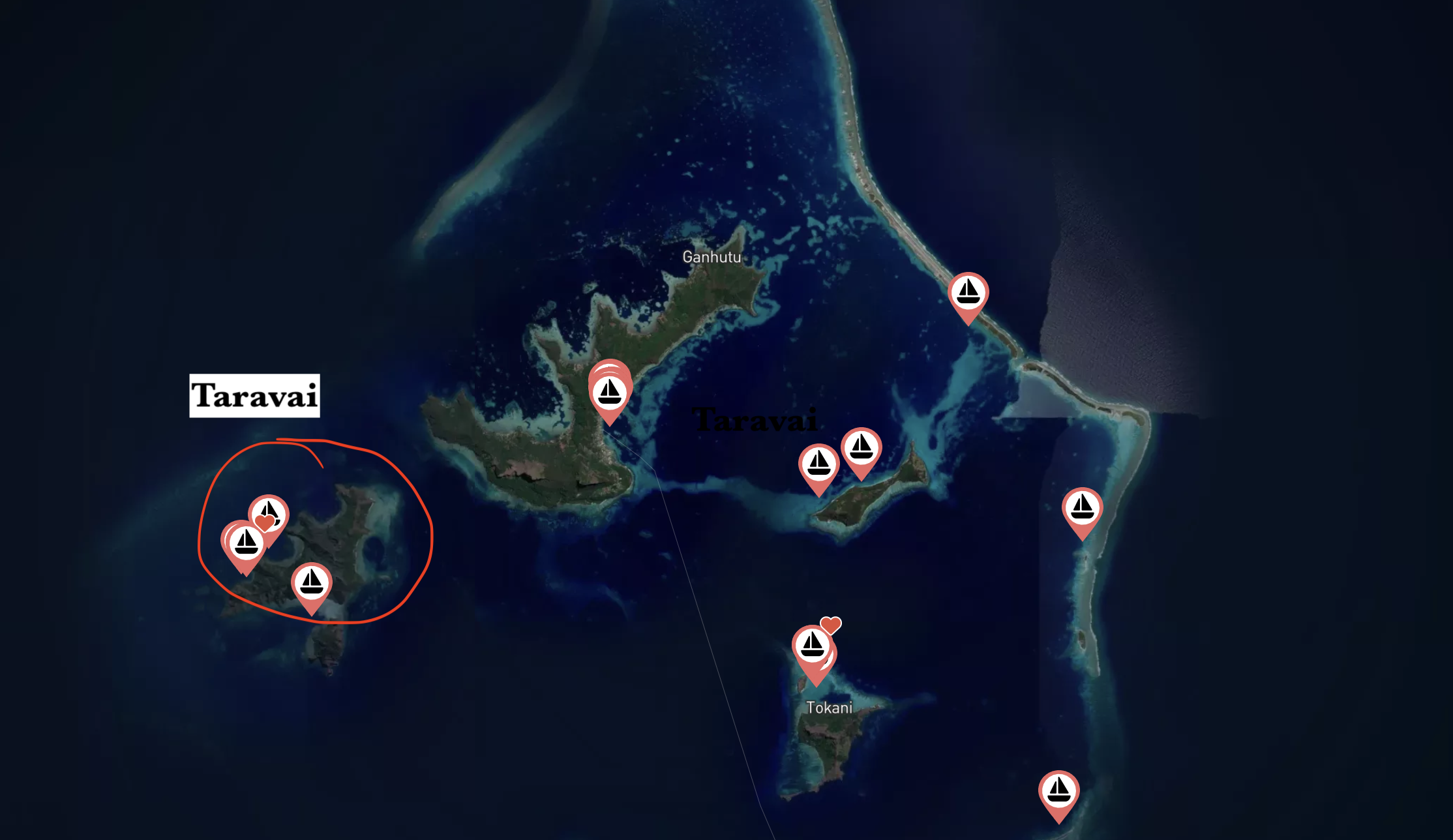
The Gambiers, from NoForeignLand. It’s about 10 miles across.
The day before the event itself, cruisers gathered to help prepare the pit, which is a deep-ish trench dug in the ground. Though the same pit is used every time, the detritus from the last roast needs to be cleared out. This involves a lot of shovel work and separating the dirt from the rocks. Then gathering new material to be laid. There’s a fair amount of work involved.
Sadly, I was on the boat dealing with dinner prep for that night, so there are no photos. Jeremy explained the process.
After the pit is cleared, the re-lining begins. Dry banana leaves and coconut husks on the bottom, then a layer of small sticks, then larger pieces of wood. Large stones (reused from last time), fist to head size, go next.
In the morning, the fire is lit and allowed to burn down to coals, heating the stones. A huge cooking pot, filled with pieces of pork from a pig Hervé had hunted earlier that week, is placed in the middle, then a good layer of green banana leaves stalks, then leaves, put on top. (This provides some flavor but a whole of moisture; it also insulates the food from direct contact with the incredibly hot stones.) Banana leaf packets of vegetables (bananas and taro, pumpkin) get tucked in around the edges. Breadfruit, cut into wedges, is added too. A sailcloth cover goes over the whole thing, and shovels of dirt go on top of the sailcloth.
It’s a steam oven, effectively, doing such a good job of trapping the heat there’s not even a wisp of smoke visible.
The day of the event itself we gathered at 11 am, maybe 30 cruisers and friends and family, and when the oven was opened up it was a spectacle. Shovel off the dirt, peel back the sailcloth. Retrieve the packets of vegetables and manhandle the massive pot out of the pit and onto a nearly table.

Hervé and his uncle, Tony, pulling back the sailcloth
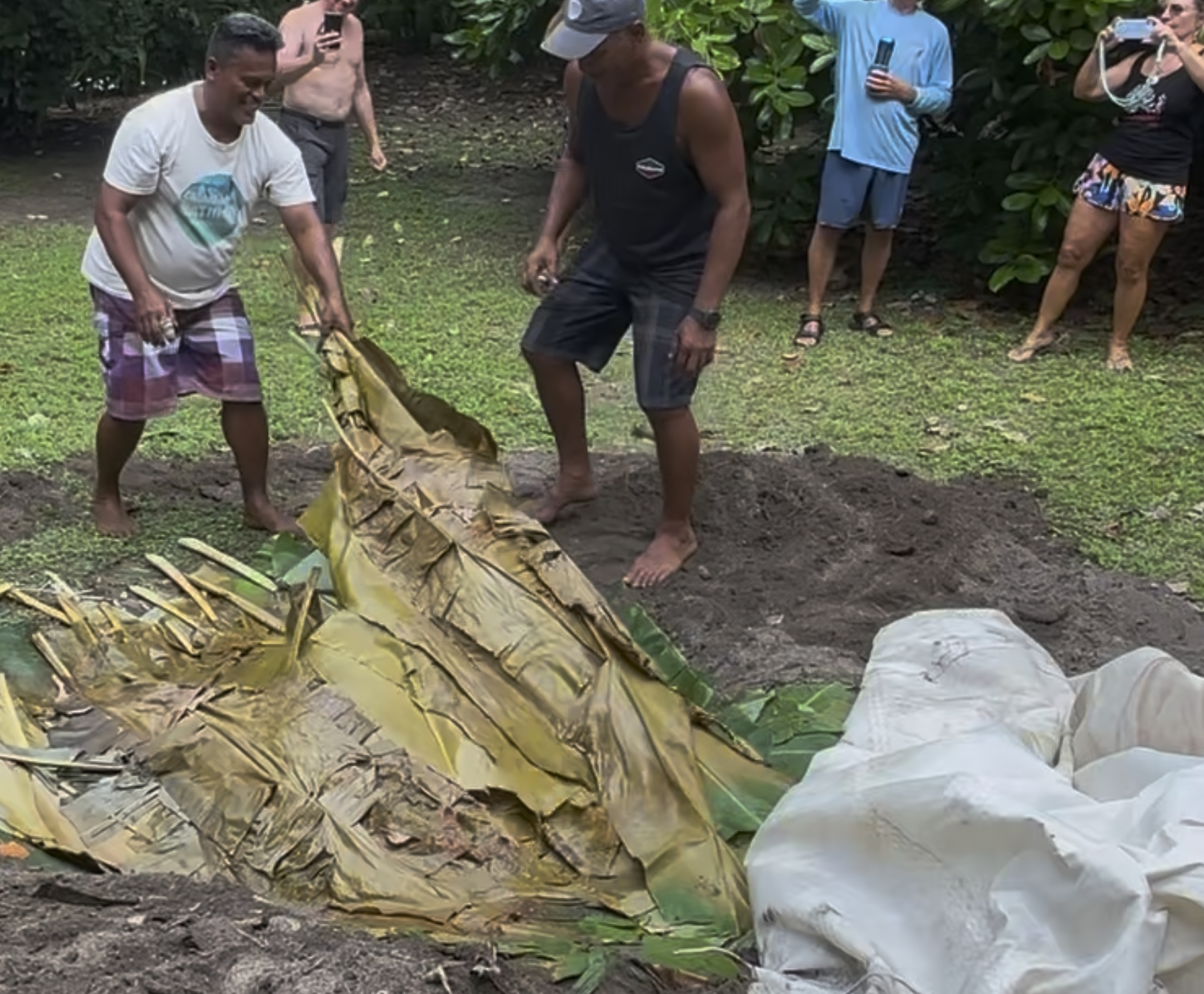
Pulling back the banana leaves
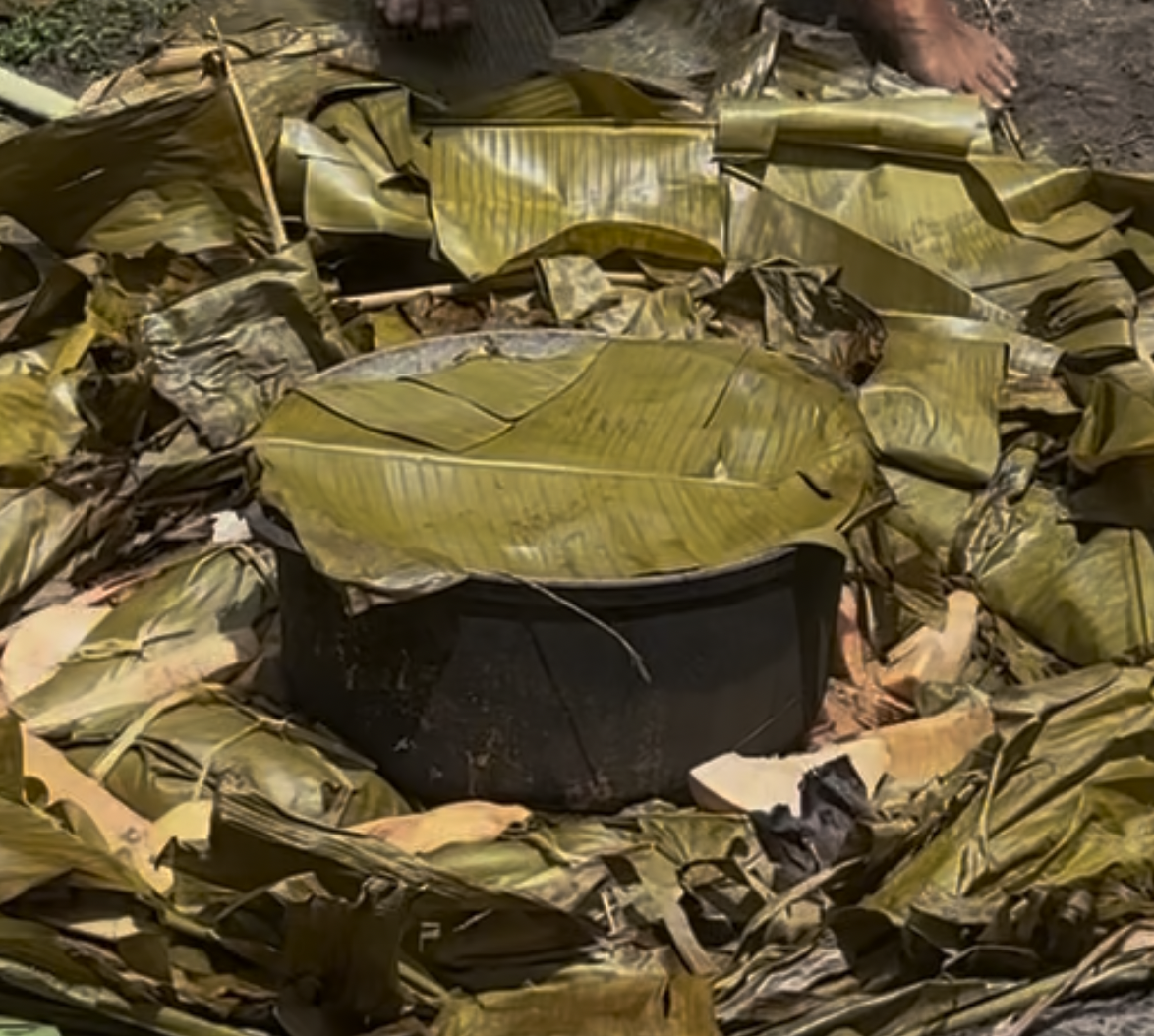
Pot in among the banana leaves. Can you spy the packets of vegetables and the breadfruit?
My favorite aspect was the serving trough for the vegetables. Probably 3 feet long, the hollowed out tree (it had to have been a hollowed out tree. Or a thick branch in any case) had been carved with eared ends to serve as handles. The wood was shiny from use, worn smooth over many feasts. Coconut milk was poured into the bottom of the trough, then the packets of vegetables scraped into one side or the other (one side was bananas, the other pumpkin) and mixed with some of the coconut milk.
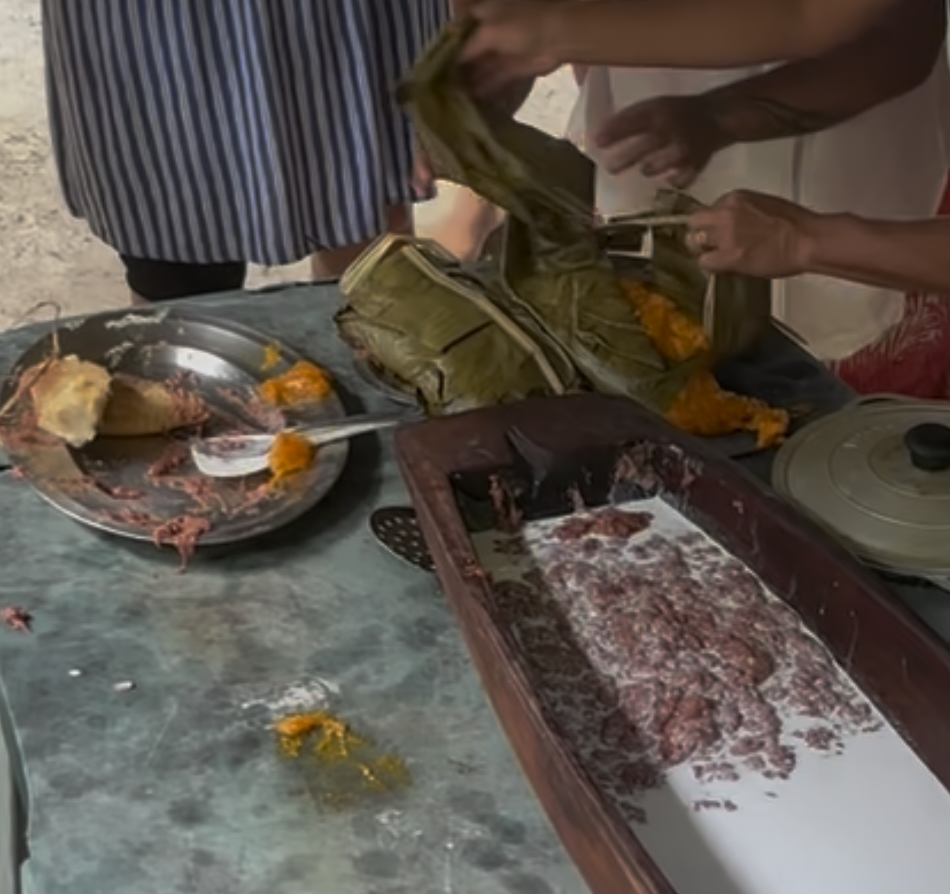
Bananas turn reddish when cooked
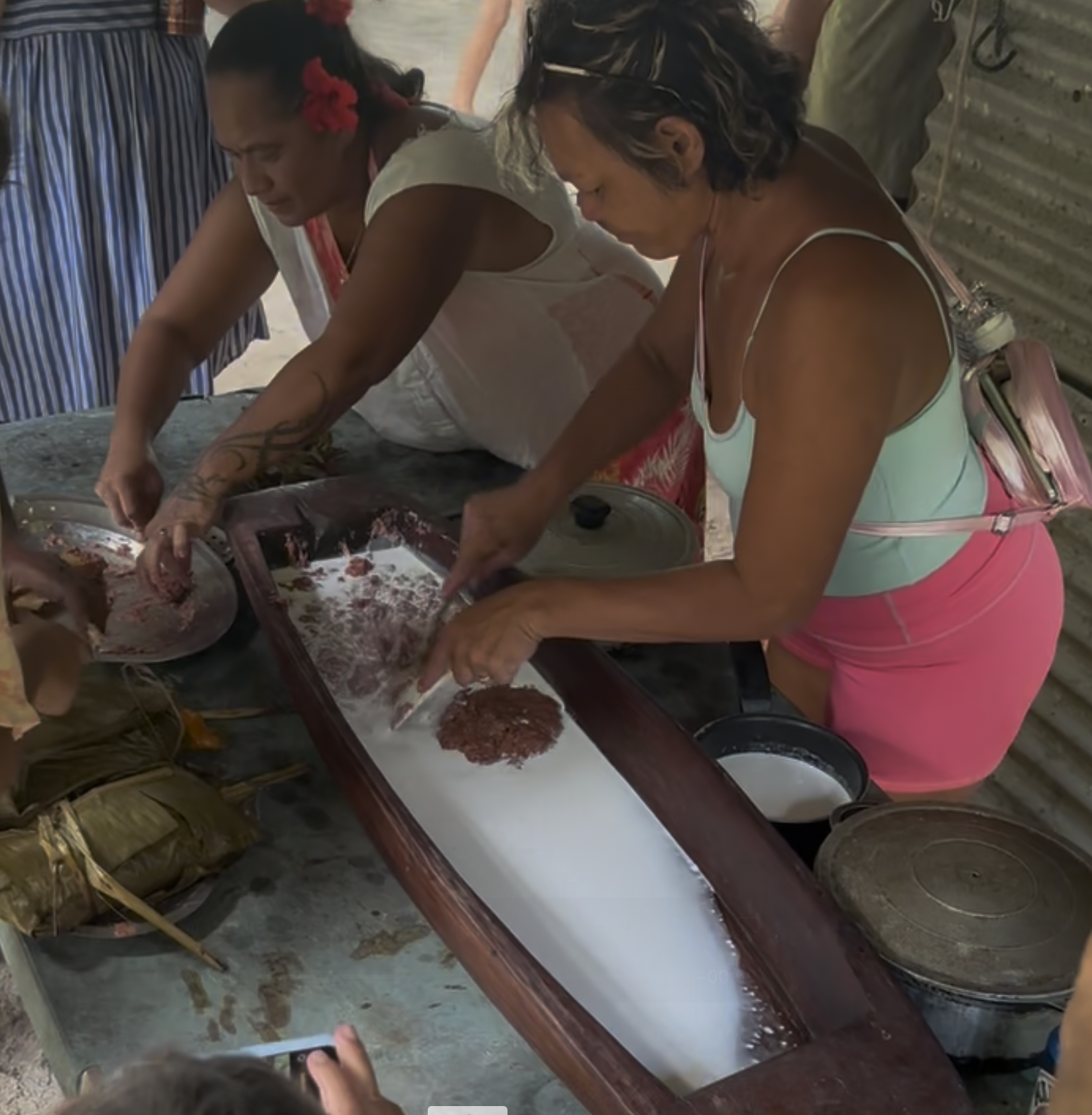
Valerie and Nadia opening packets and adding veggies to the trough
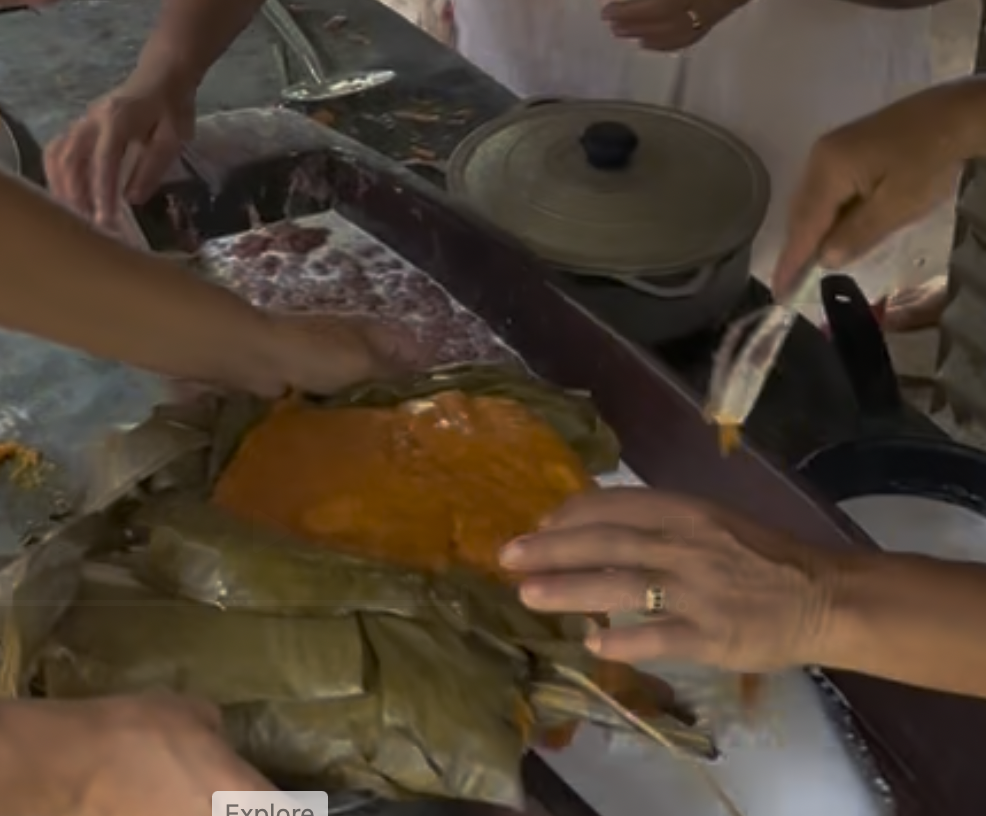
Pumpkin packet going in . . .
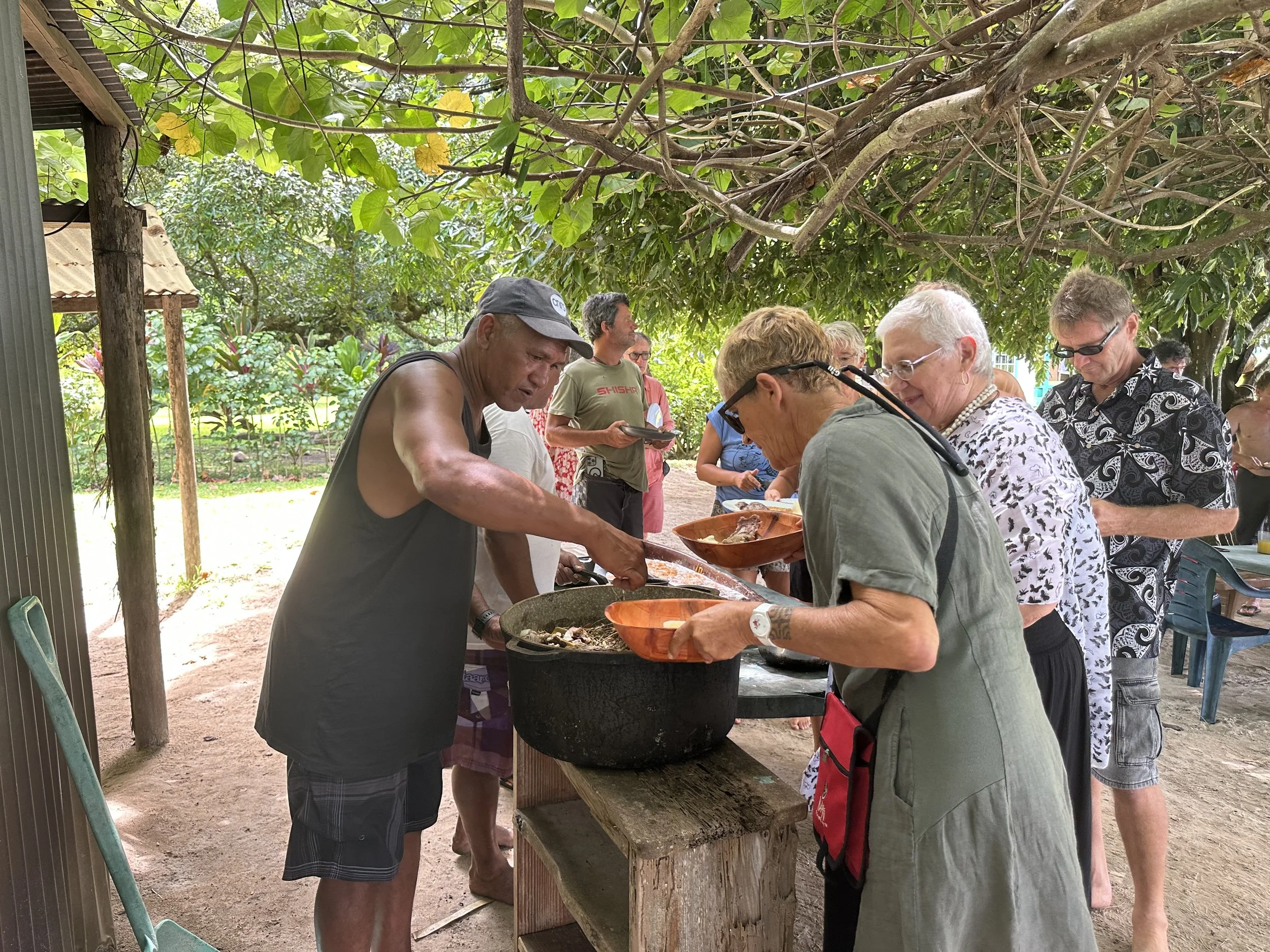
Tony serving pork from the massive pot . . .
We ate under the trees, or on blankets spread on the grass, feasting on pork and vegetables while chatting with friends new and old. After lunch, a game of pétanque started, with cruisers and locals alike banding together in teams. Pétanque was followed by soccer, or a round of passing the soccer ball with (mostly the dads) showing off their ball-handling skills. By 6 everyone was wrapping up the afternoon, full of food and friendship and a lot of laughter.
It might say something that I took almost no photos . . . sorry!
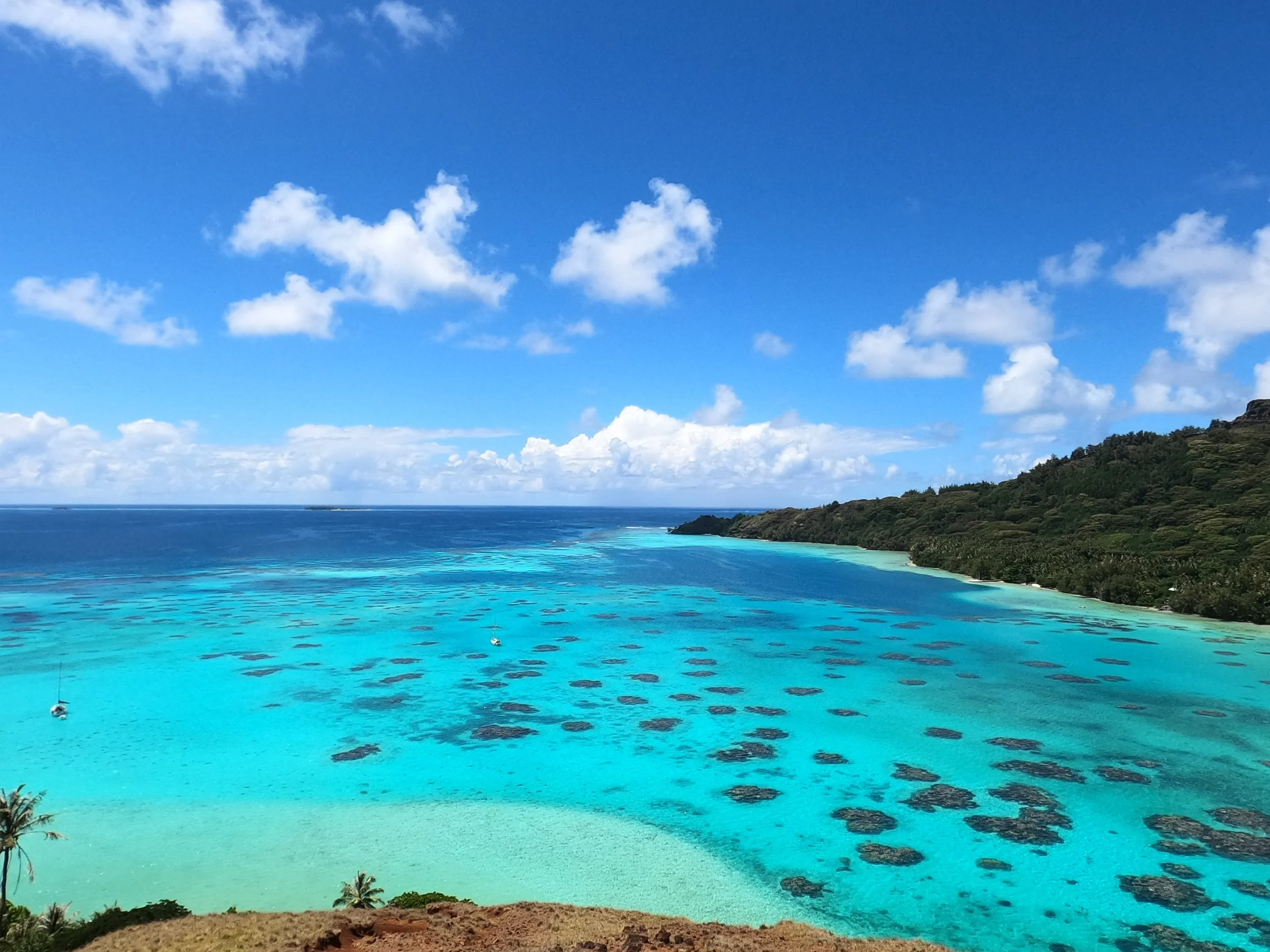
Not at Taravai. But stil in the Gambiers! Can you find Calypso? (Hint - not the boat on the left. That’s Metani!)