French Polynesia Provisioning Considerations
Bagels. We had bagels this morning for breakfast, which doesn’t sound like a big deal except when you remember we a) sail without a freezer, and b) we’re anchored 30 miles from the closest bakery, which doesn’t make bagels (they may never have heard of bagels) in any case.
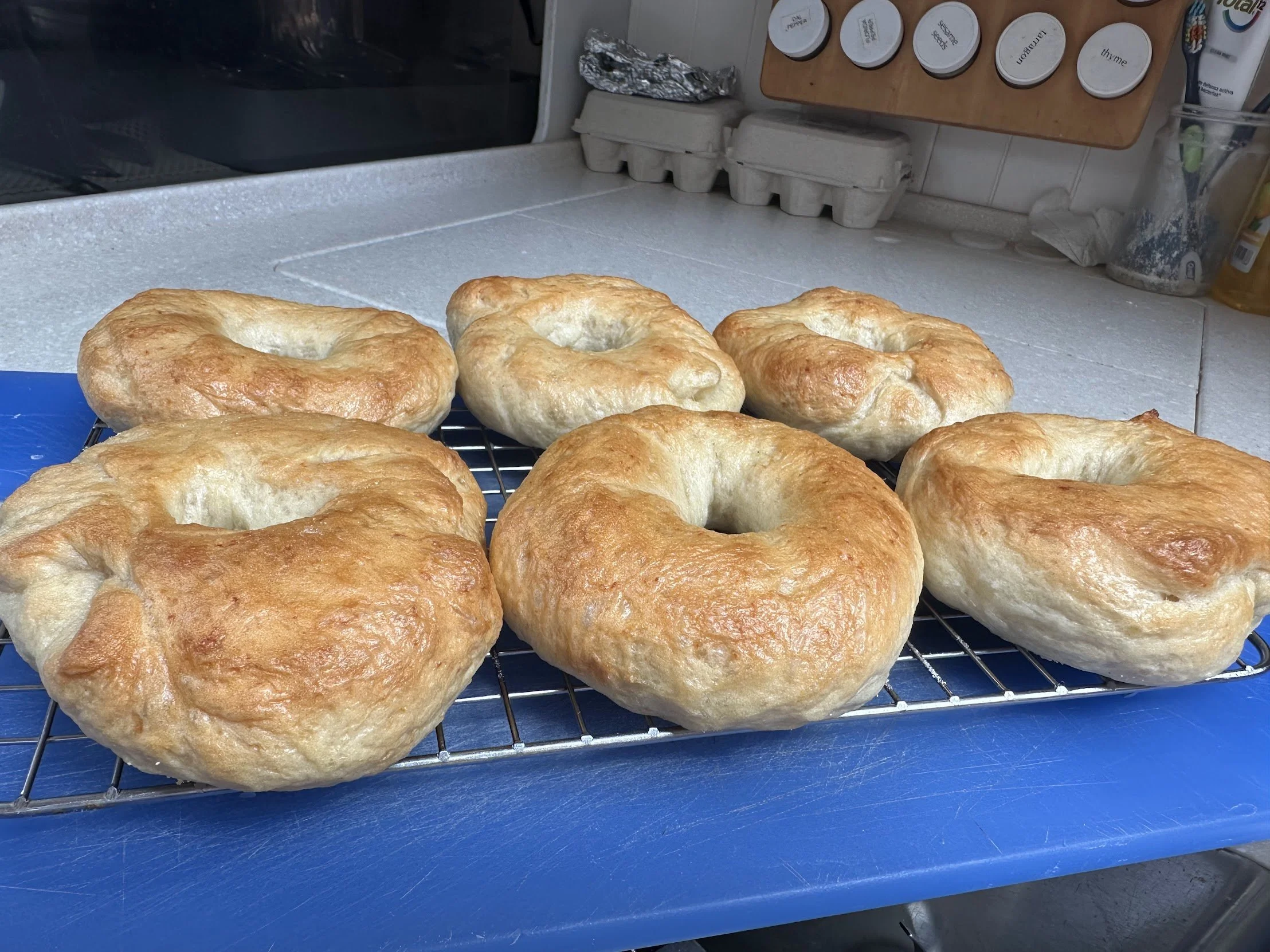
Boatmade bagels!
So yeah. Having a bagel breakfast means making the bagels, which means making sure we have all the ingredients we need aboard. Given that the ingredients are flour, yeast, salt, water, and sugar, this is not a tough set of requirements. Some recipes are not so accommodating.
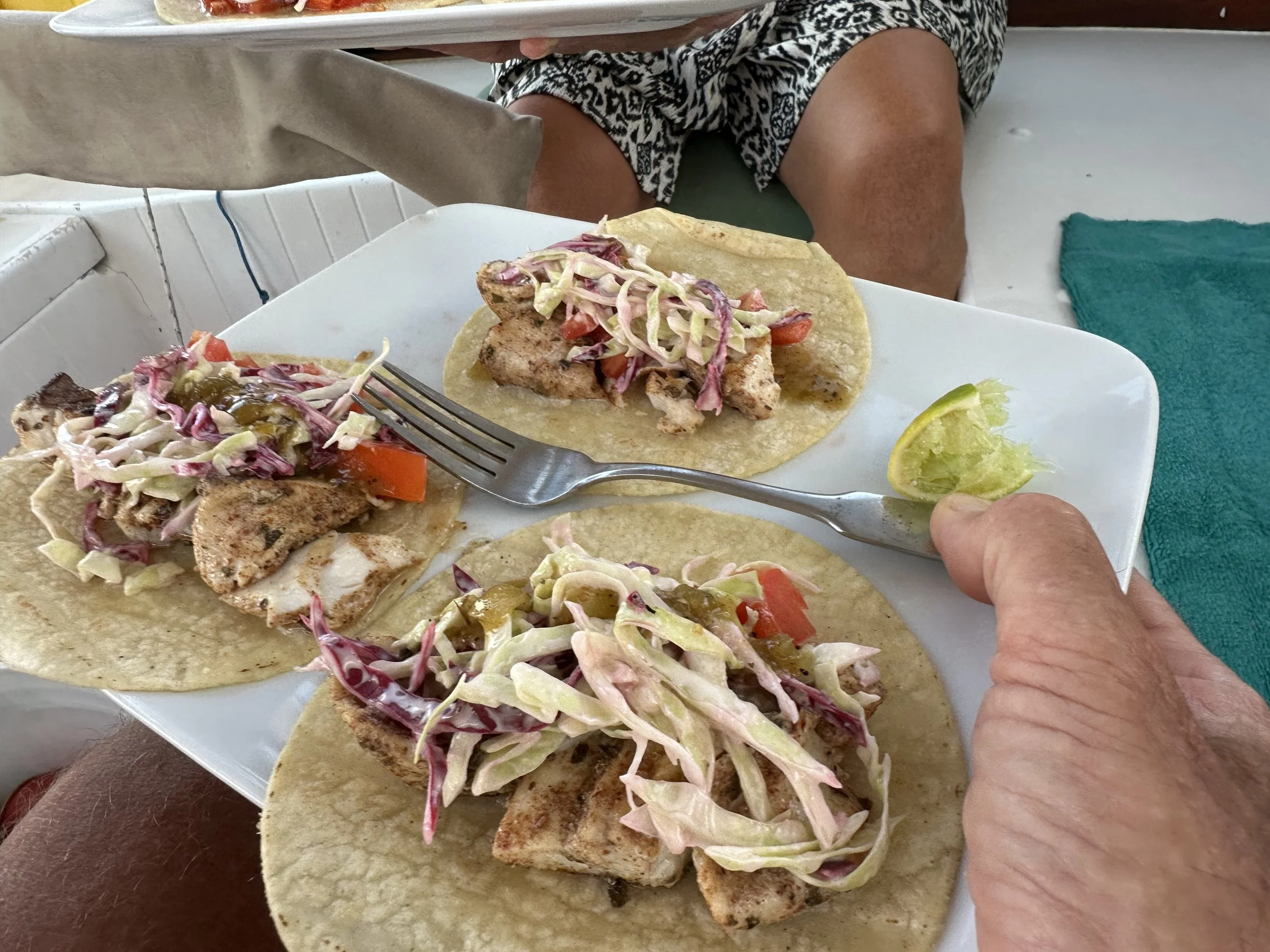
Tacos, with fresh fish and coleslaw . . .
We left Panama with the boat stuffed to the gills. We’d done a lot of research on what was not available (black beans) or extra expensive (coffee, beer and booze), and had provisioned accordingly. It’s not that we did a bad job, but if I could turn back time there are some things I’d consider.
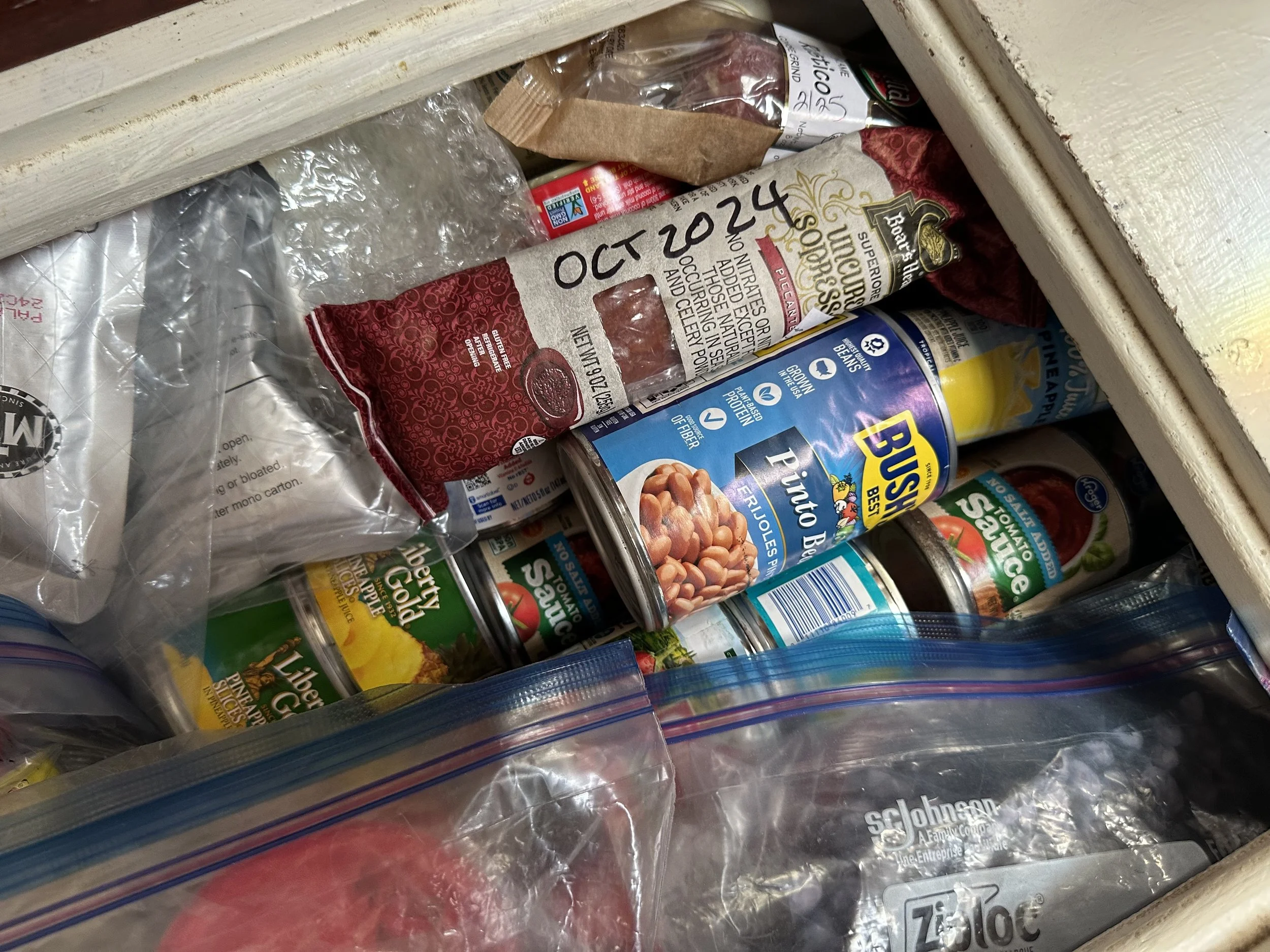
Some long-eaten goodies . . .
Three questions:
What are our food essentials, and is it available/affordable there?
What’s the best bang for the buck, size-wise or volume wise?
What special stuff makes life a little more fun or easier?
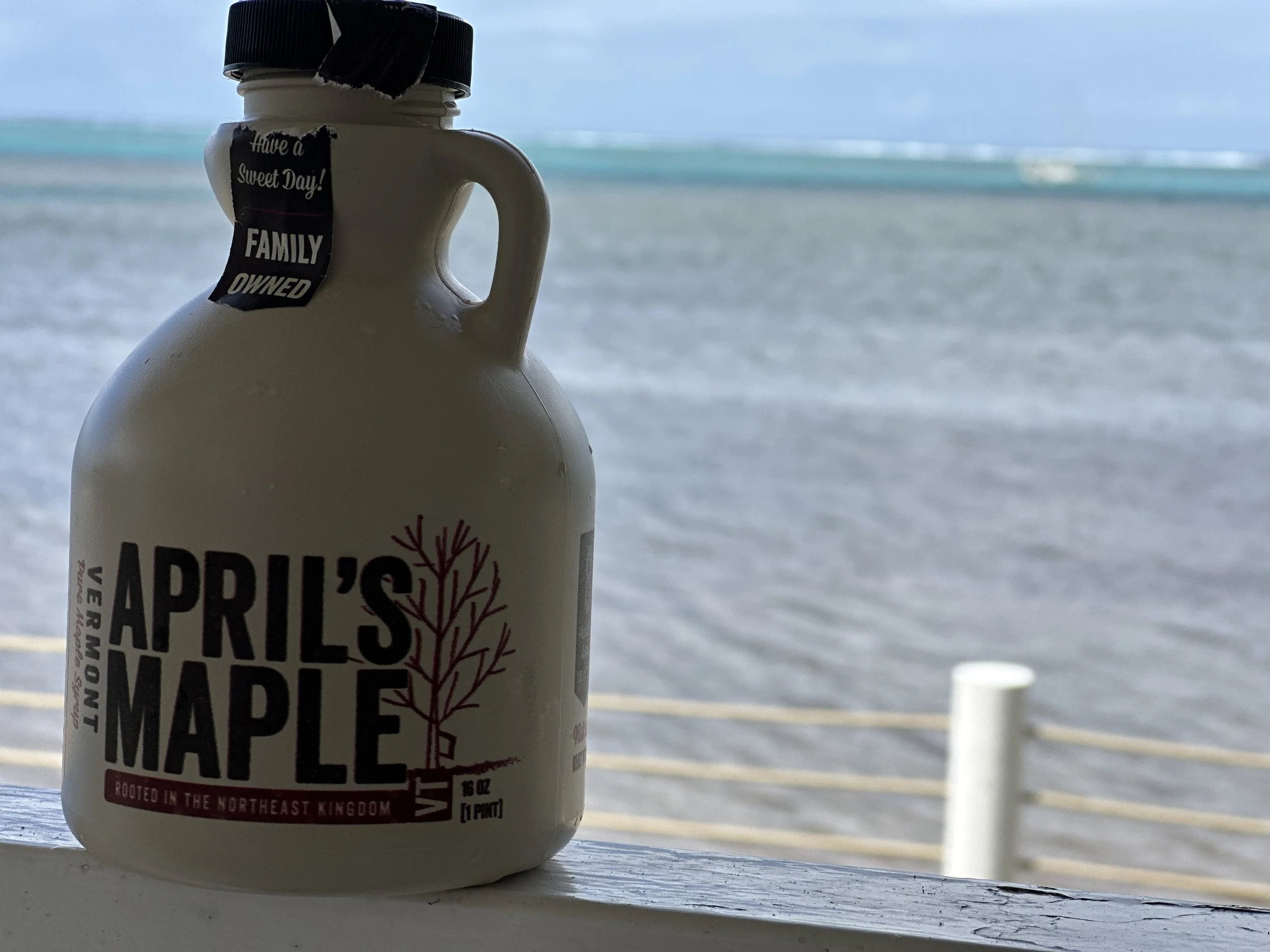
Gotta have maple syrup. Not negotiable.
To start, French Polynesia has a well-deserved reputation as a pricey spot. Sure. It’s a country of islands with little manufacturing, way deep in the Pacific Ocean. Most things are arriving by plane or ship. There’s a hefty import tax to boot. It’s a country where your food budget can easily get out of hand. Knowing what to expect and how to stock up before you arrive can save you thousands of dollars.
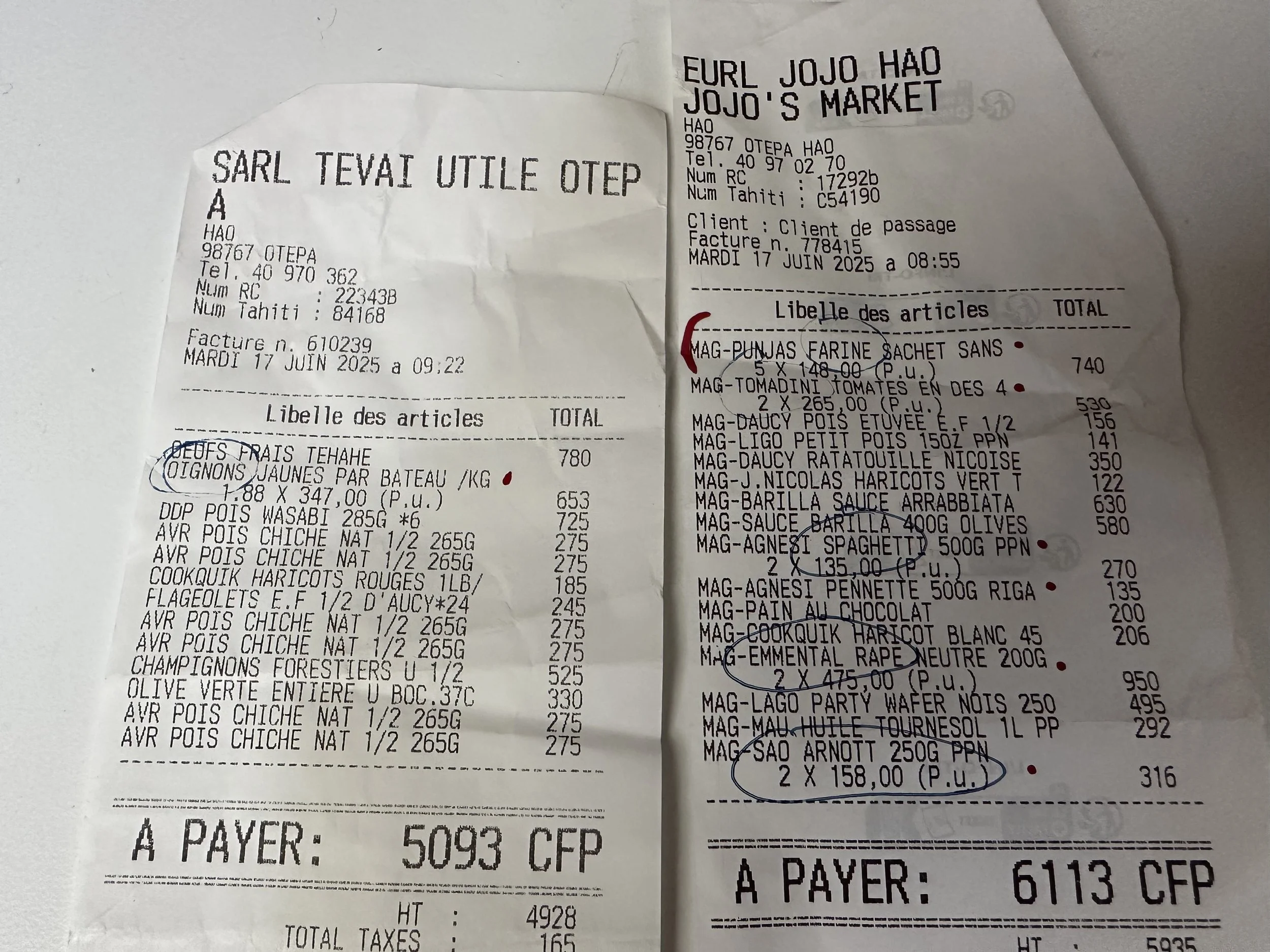
Exchange rate": 100xpf=$1,. roughly. Wasabi peas for $7.25 . . . eggs $7.80/dozen.
There are those who will tell you that ANYTHING bought before you get to French Polynesia will be cheaper. I asked on one WhatsApp group if white vinegar, which we use for cleaning, was available in FP, I had one response of “Go to the Costco-equivalent in Panama City. Way cheaper.” While I don’t doubt that’s true, when white vinegar is available and maybe 10% more expensive here, but rum costs twice or three times the price . . . I’d rather take more rum than white vinegar. When you’re on a small boat, cost savings needs to be balanced by space realities. (Note: a friend recently needed to buy a gallon of Barnacle Buster for a maintenance project. It’s available here - for $240 a gallon. He wishes he’d bought a couple of additional gallons in the US, where it’s still pricey but less than half of that cost. Don’t forget engine maintenance supplies in this calculation!)
Okay, French Polynesia realities. For starters, and we were aware of this, basic staples like white flour, yeast, pasta, cooking oil, and good powdered milk are ubiquitous AND subsidized, meaning the prices are semi-controlled by the French government. There are a few other things on this list too, like butter, some cuts of New Zealand meat (found in the freezer section), certain brands of canned vegetables, and even some shredded cheese that we’ve gotten used to as our pizza cheese. These items (especially the dry goods) are ubiquitous even in the smallest magasins in the smallest atolls in the Tuamotus, though finding unleavened flour has at times been challenging. There is no need to bring 100 lbs of white flour with you, or 5 cases of spaghetti.
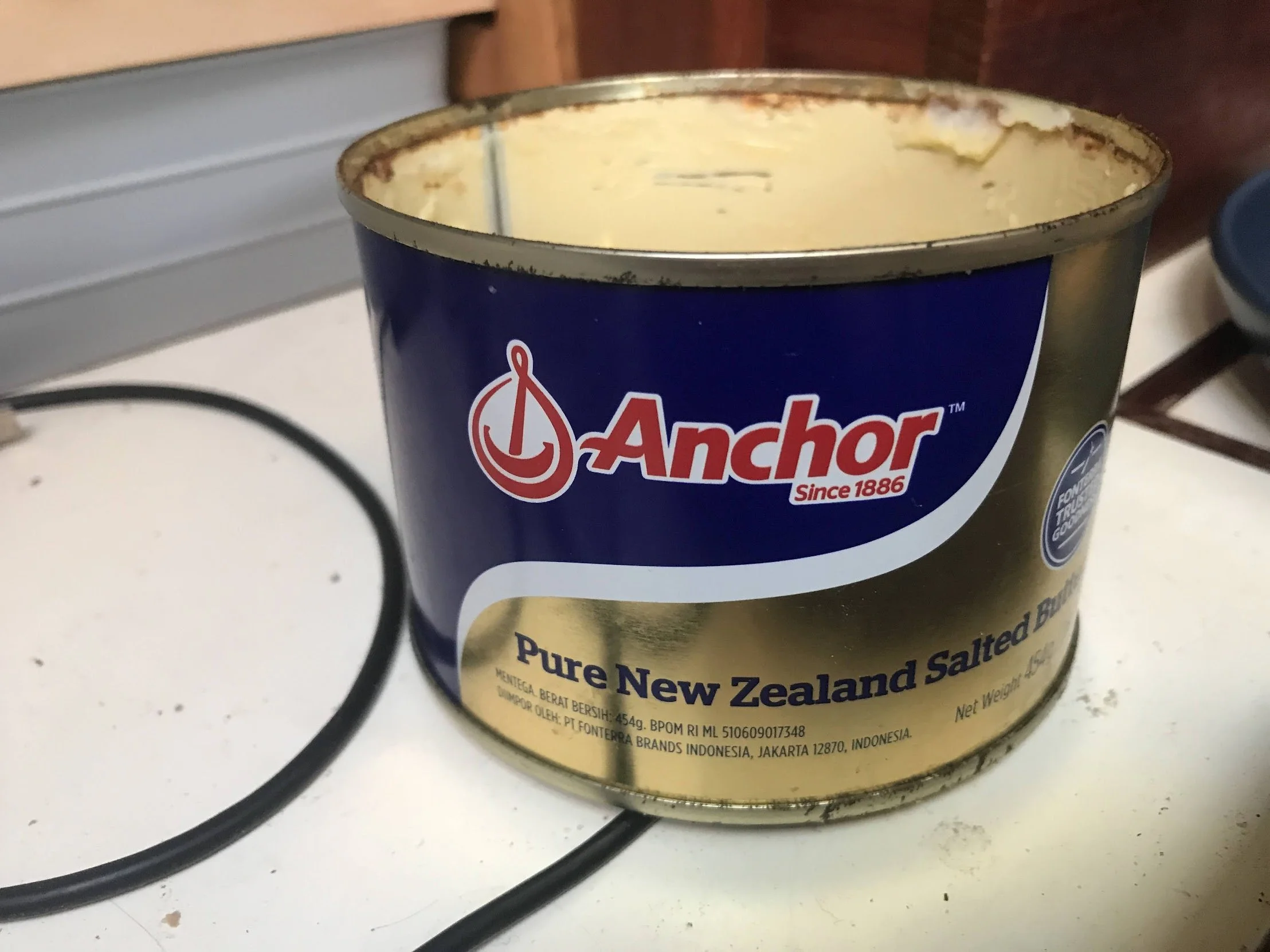
Canned butter is CHEF’S KISS
Surprises.
Prices, other than fresh produce, have not been heart-attack inducing. Maybe this is because I’m buying mainly staples that are subsidized, but I have not always been shocked at what things cost. Are they expensive? Sure. (I think US grocery prices will astound me when I go back, but that’s another topic all together.) Have they been so high I can’t fathom it? Not so much. (Okay, the local, in-season watermelon at the grocery store in Tahiti that was $30 - THAT was a shocker.)
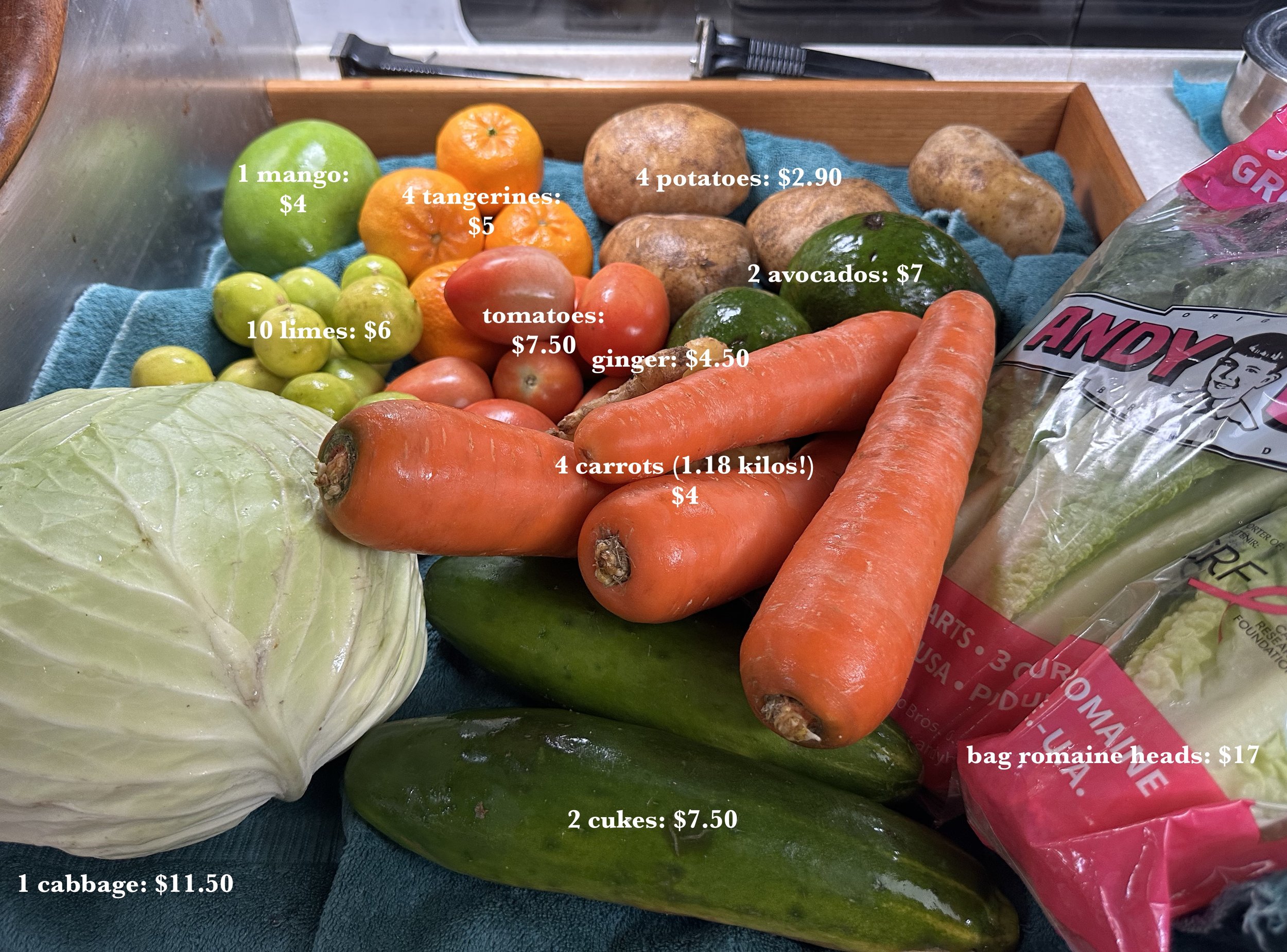
Fresh produce prices in the Tuamotus are JAW DROPPING most places.
There are a couple of things I expected to find easily - hence question #1 above.
Rolled oats are far and away the reason for question 1. I had assumed that rolled oats would be a staple everywhere. Assuming is a bad idea. Rolled oats? NOT A THING in FP. Bring enough to last you at least until Tahiti, where I did find some at a semi-reasonable price. I have not yet researched what happens farther west from here; I’ll do that before we leave Tahiti. I’ve seen rolled oats exactly once, in a small, 1-lb size can that cost $8. I make granola in massive batches of 8 cups of oats to the rest of everything else - that would be $16 in oats. In the US I buy 5 or 6 lb bags from Costco that cost $12. One of those bags nets me 5 batches of granola. Rolled oats were top on my list of things I wanted family to bring in when they came for Christmas.
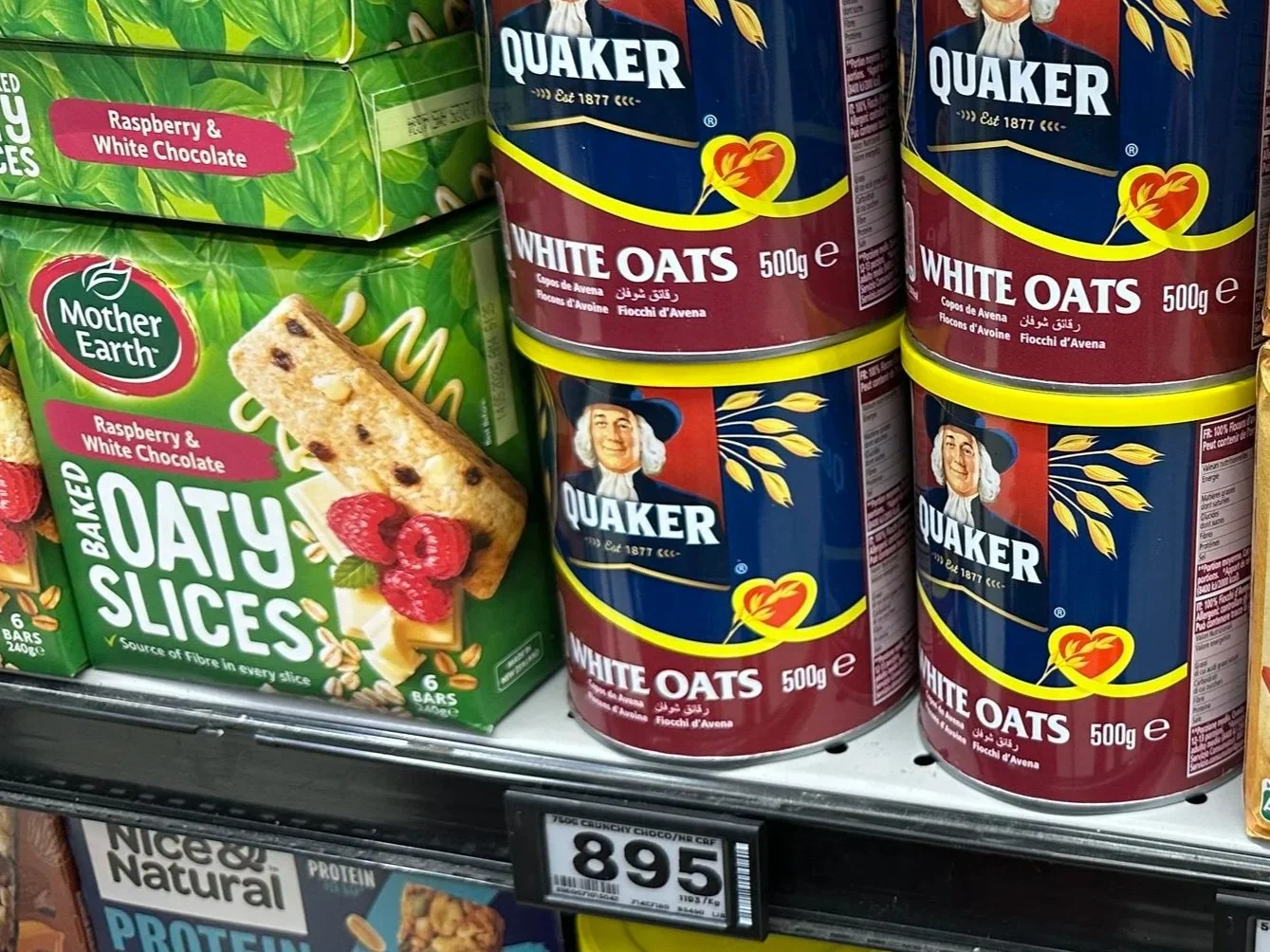
Yes, that is $9 for ONE POUND of rolled oats
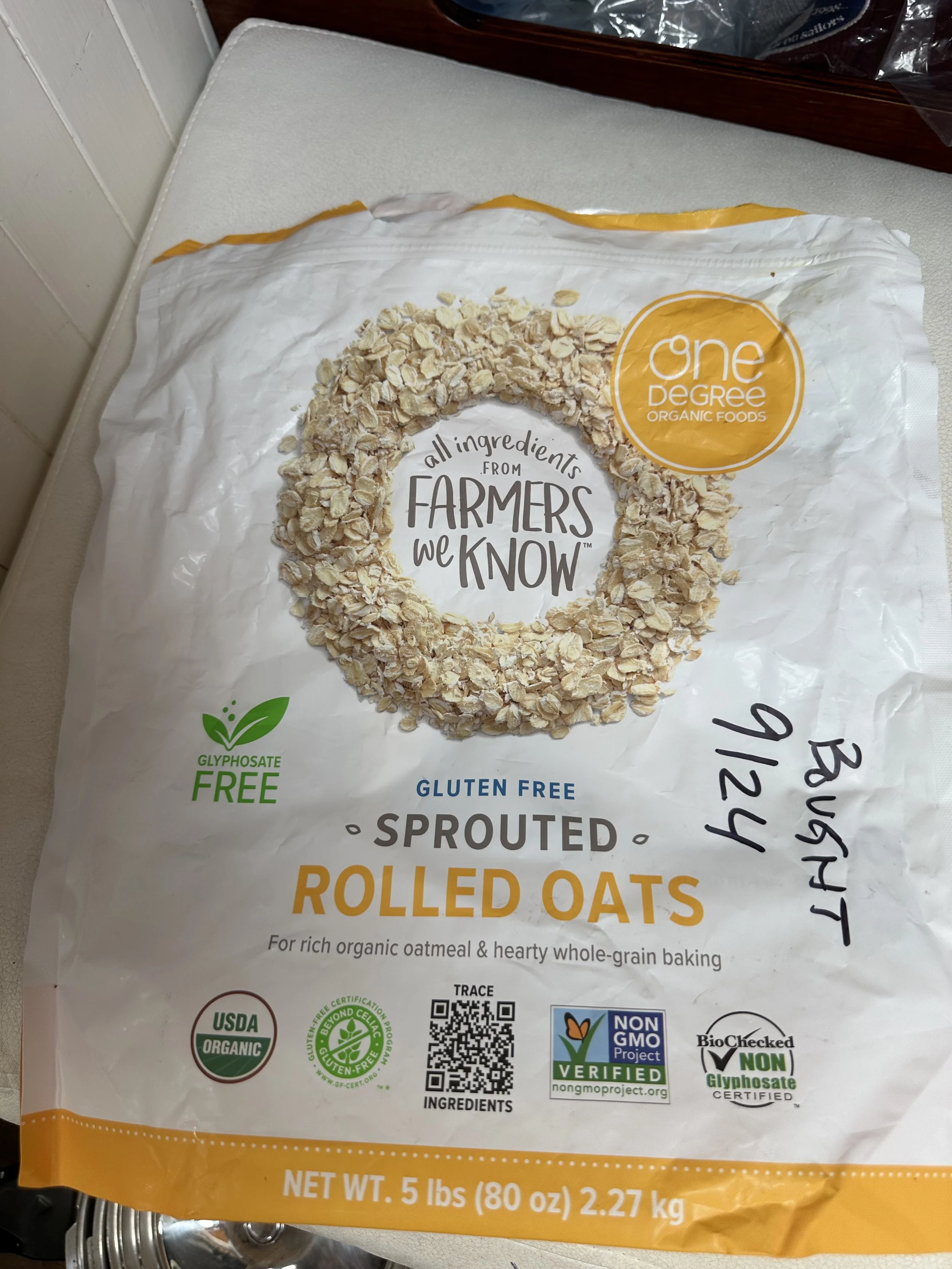
$10 for 5 lbs in the US. Yes, you can buy less expensive stuff but the bag vs box storage fits better aboard
Canned tomatoes have been challenging to find on a regular basis in the Tuamotus. Forget the diced tomatoes I prefer. Some brands are subsidized, which means the price isn’t insane, but they’re just not in a lot of stores in the Tuamotus. When I see them, I buy as many as I can, subsidized or not, leaving at least one can on the shelf for someone else.
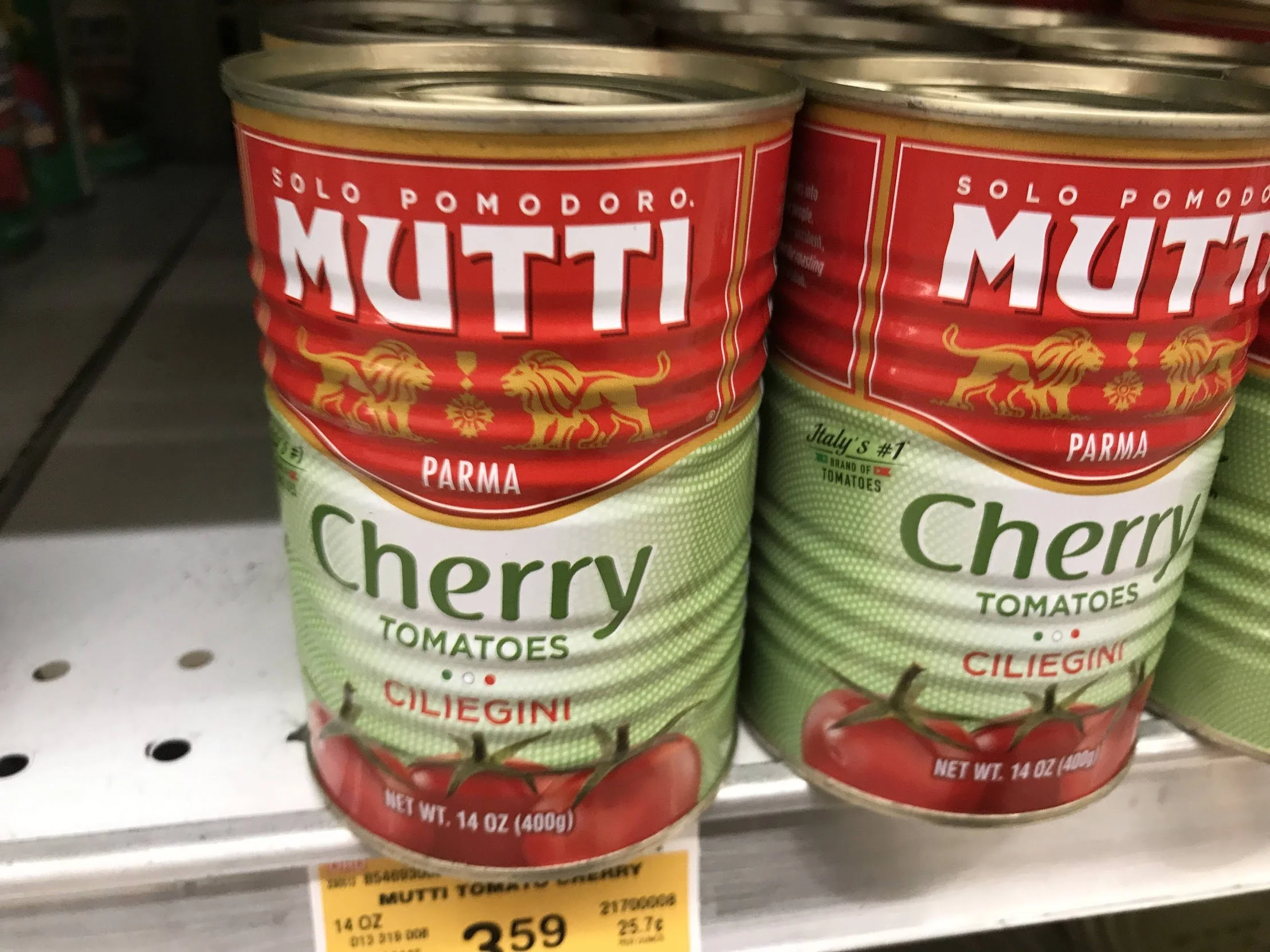
First discovered in St Martin. These are the ultimate canned tomatoes! (I found more in Tahiti!)
Cheese is not available everywhere. Not even Brie. (and be careful of buying a wedge of Brie - sometimes they wrap it in store-supplied plastic wrap, which here seems to be impregnated with some kind of floral scent. It transfers to the cheese. Ask me how I know.) We’re pizza people, so when I see the emmentaler rape (shredded swiss-ish cheese) I buy a few bags to stuff deep in the fridge because I know I might not find it again soon. I saw block mozzarella in the Marquesas (in Nuku Hiva and Hiva Oa) and my eyes might have gotten VERY. BIG. when I saw balls of fresh mozzarella (in the freezer section) in a store in Rangiroa (for $3 a 4-oz ball; I bought them all, all 3 of them) but it’s not a frequent find. Forget sharper cheese. You can often find a local , shelf-stable Velveeta equivalent.
Wine, even rot gut wine, is very expensive. You’d think that because it’s France . . . no. The cheapest bottle we’ve seen so far is $14 (it’s undrinkable). In the States, for us a $14 bottle of wine would be for a special occasion. We’re having to adjust our sensibilities. I wish I’d bought LOTS more wine in the US (those 3 liter boxes, with the bladders inside) and then filled empty spaces in Panama.
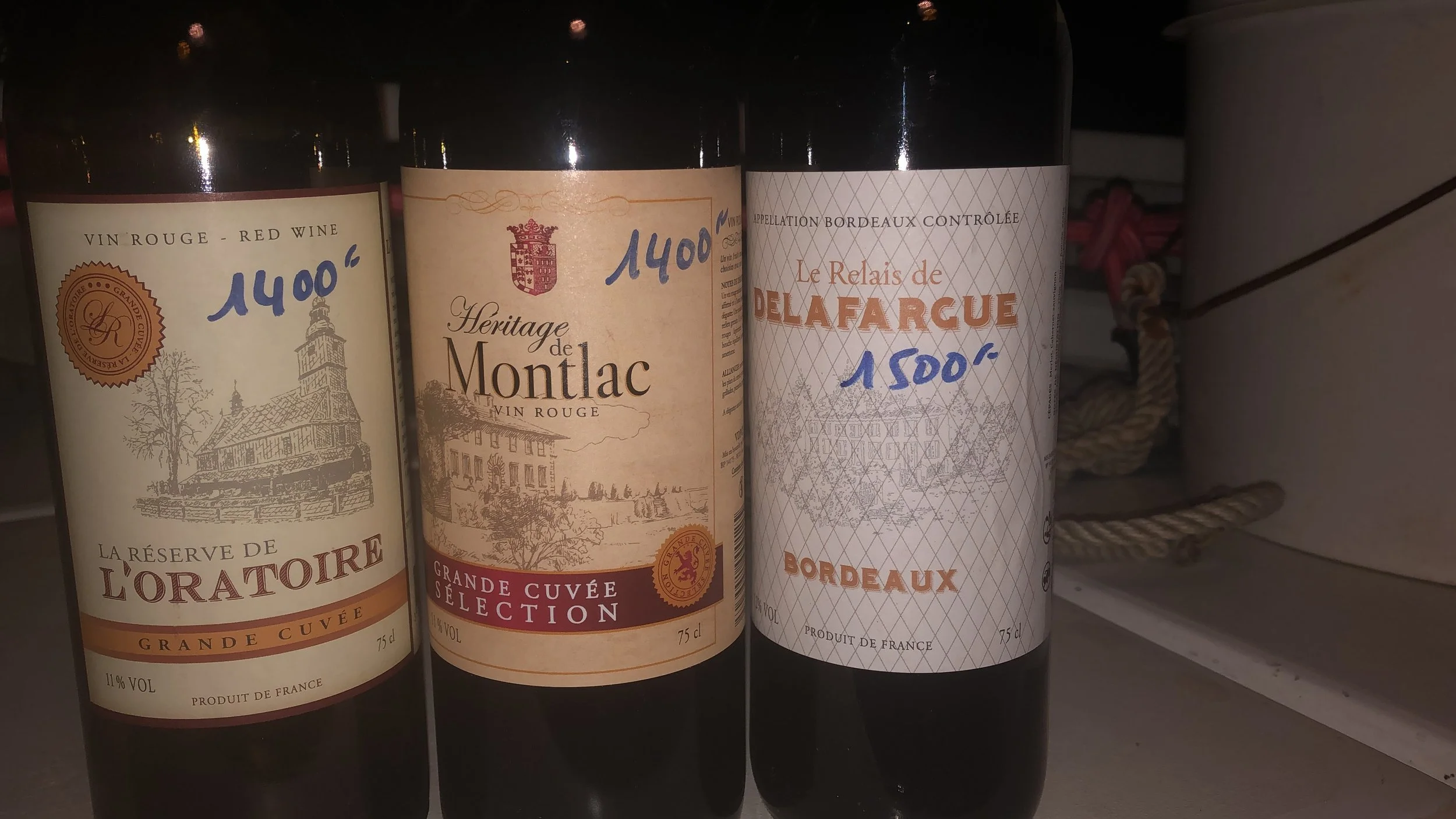
These are the CHEAPEST wines we found in the Tuamotus. $14 and $15 a bottle. The middle one is undrinkable.
Chick peas have been REALLY hard to find. I’ve seen dried chick peas in one spot (Hao) and canned ones in only a small handful of stores. Most of those, too, have been the larger cans and not the 1-lb size that are much more practical for our crew of 2. Also, the chick peas (called pois chiche here) are smaller than I’m used to. Doesn’t change the taste, but it’s an interesting observation.
Pineapple in cans. Not available. Not anywhere. Not even in Tahiti, where you can find most things at a price.
Coconut oil. You can find it here, but it’s a pharmacy item generally. I’ve seen prices start at $20 for a half pint jar and go up from there - WHEN you can find it. If you use coconut oil in cooking, bring it with you.
Frozen vegetables (other than frozen french fries) are often in 1 or 2 kg size bags and are EXPENSIVE. Think $12-$15 a bag.
Baguettes (called pain here) are about 3 feet long and subsidized (each one costs about $.70). They’re not what you’re expecting when you think “France” and “bread”. Not crusty, not substantial. Not great. Nice to have a break from making bread, but not the stuff of bread dreams. And if you’re spending a lot of time in the Tuamotus, know that not every store and not every atoll even has these.
Dried beans. I was hoping for lentils du puy (those awesome French lentils). No. Every store has (subsidized; about $1.20 a pound) regular brown lentils and usually pink beans and white beans. I’ve seen split peas once. Otherwise? Nope. (And forget about black beans. Which thankfully I knew about.)
Skippy Peanut Butter is in every single store I’ve walked into. Every. Single. Store. I have not checked prices, which I am sure are high because it’s not subsidized, but that it’s ubiquitous was a massive shock.
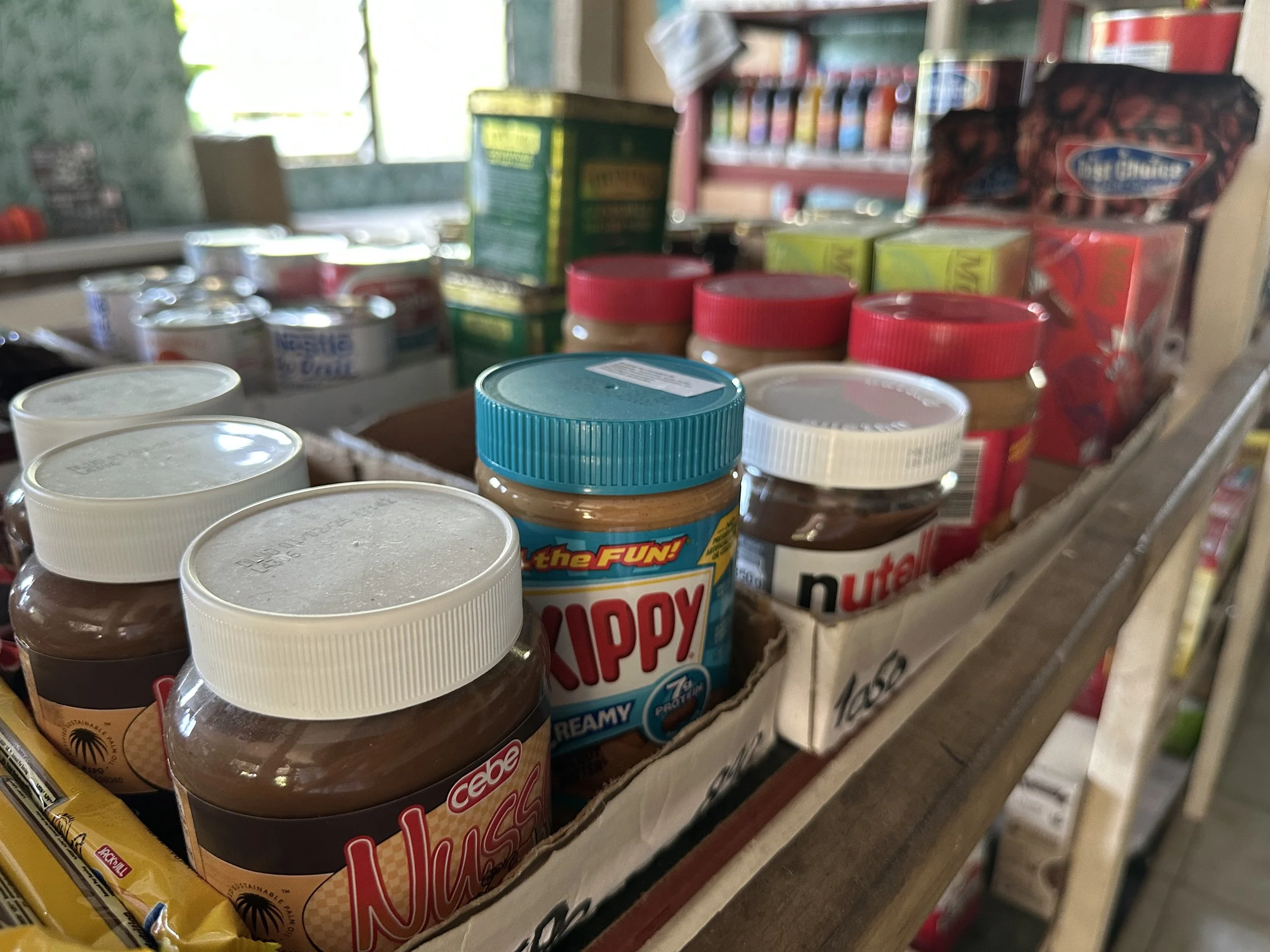
$8 small jar of Skippy. In the one store on an atoll of about 200 people.
BEER. This deserves its own category, because I’d been bracing for I don’t know what. “Take all the beer you want to drink,” we heard over and over. So we stocked up in Panama, buying as many of the shrink-wrapped 12 packs as we could carry out of the grocery store. Sure, paying $10 for a 12 pack felt like a bargain. But there’s no way we can fit all the beer we want to drink for the next year on the boat - and we’ve also found that aluminum cans get pinholes very very easily. (Plus? Panama beer is not very good to our tastes. Flavor, please.)
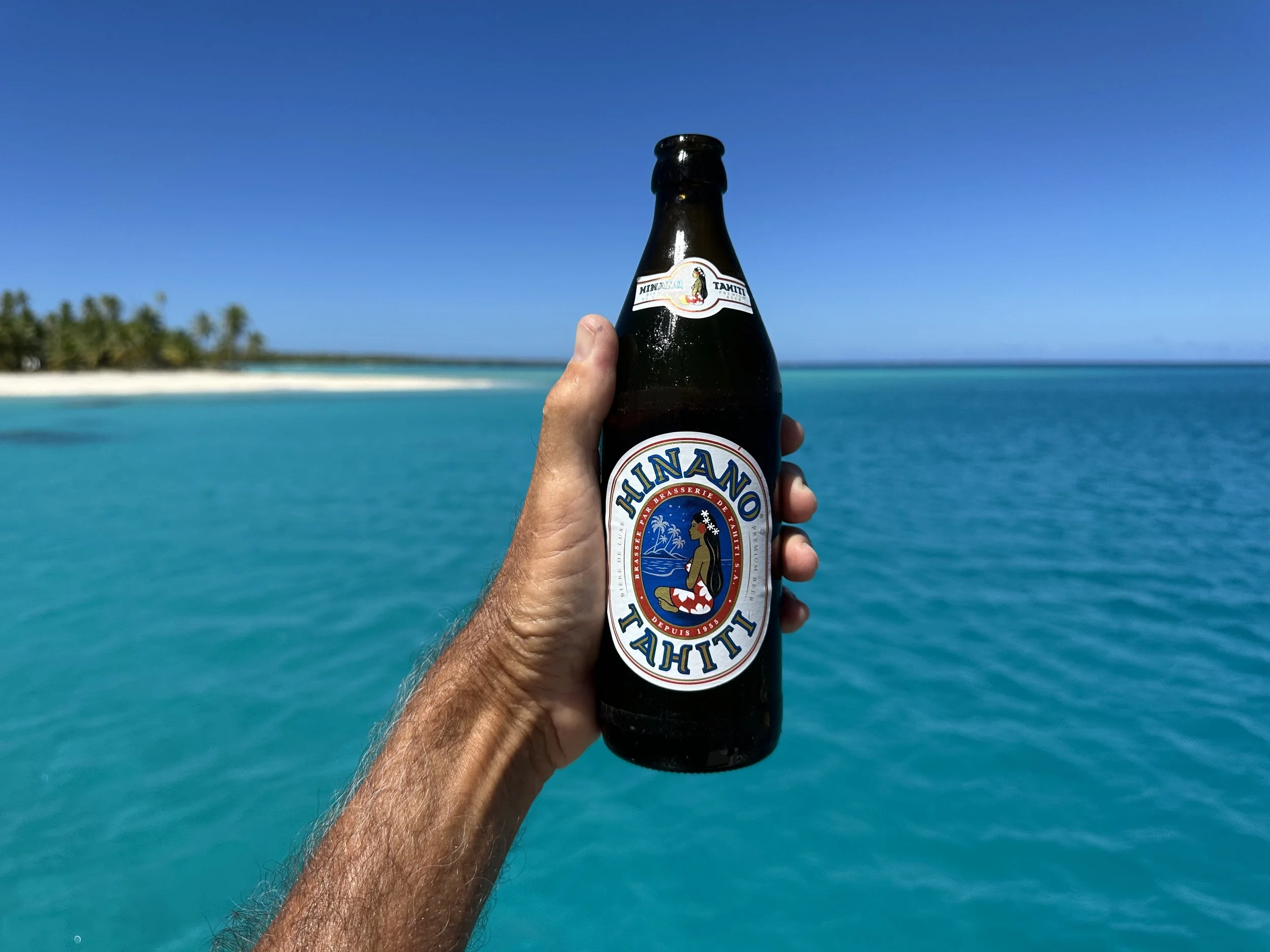
pint size bottle. Anywhere from $3-$4.50 EACH in the stores in the Tuamotus
The beer in French Polynesia is Hinano. (You can find Heineken occasionally, and maybe a couple of other beers. We’re Hinano people.) It’s sold in cans or in bottles, in 250 ml or 500 ml sizes. Jeremy’s done the math, and the best deal is the 500 ml bottles (called “obus” here). Buy yourself a case (20 bottles to a case) and go from there.
Beer is the reason for question #2. There is no way we could possibly have stocked all the beer we’d drink for a year. As far as price and quality differential goes, it would have made WAY more sense to use that extra space for wine and rum, the cost and quality of which is far better in Panama. As it was, we ran through our Panama beer by the end of April and were onto Hinano in any case. We could very easily have stashed a year’s supply of wine and rum in the space we used for those few 12-packs of beer.
To recap., with our answers to the questions I posed earlier.
Question 1: Food essentials not available/very scarce/insanely expensive here? Oatmeal for granola (plus all the nuts and seeds and cranberries . . .). Black beans, dried chick peas.
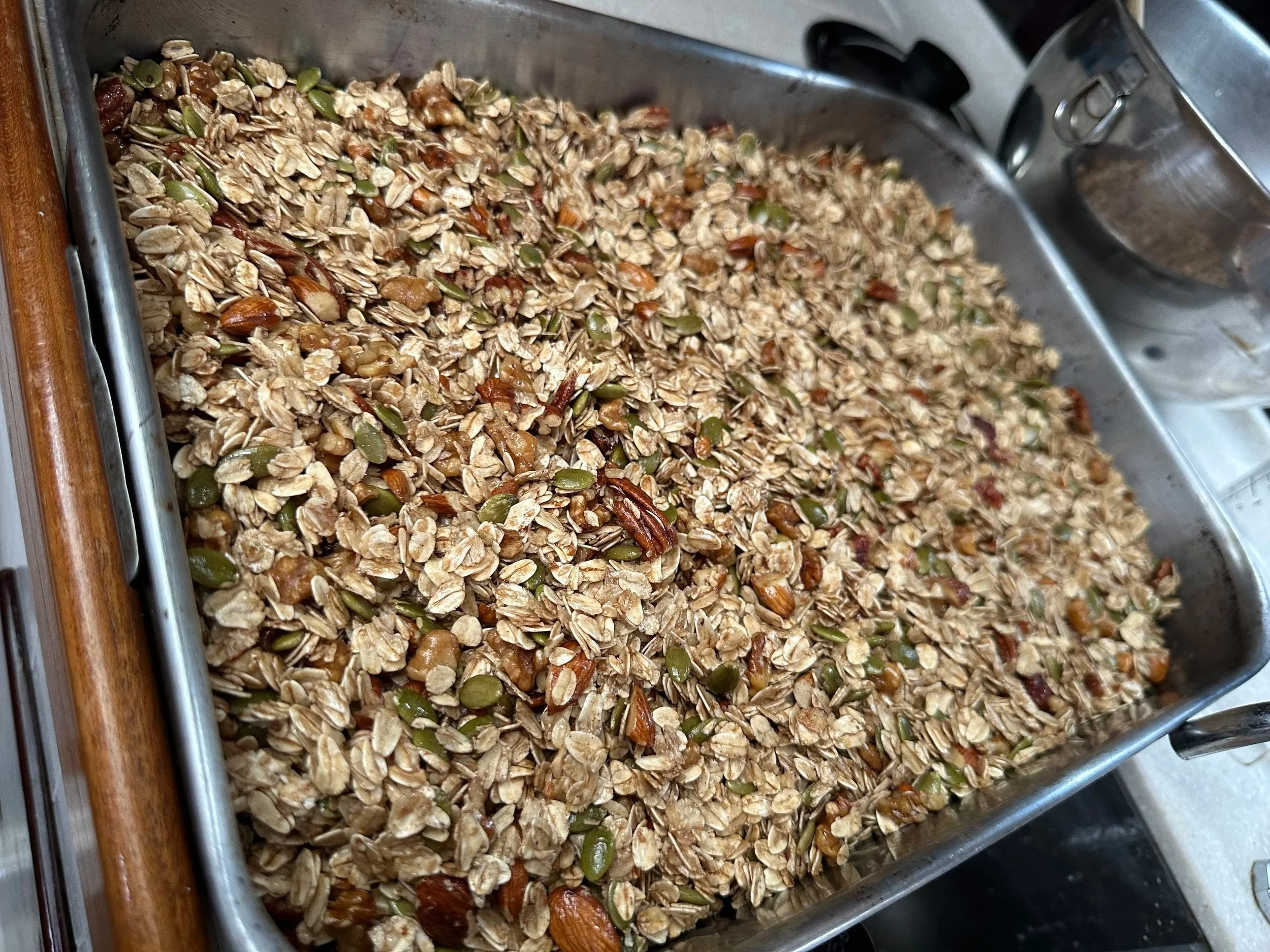
Granola - a staple on board!
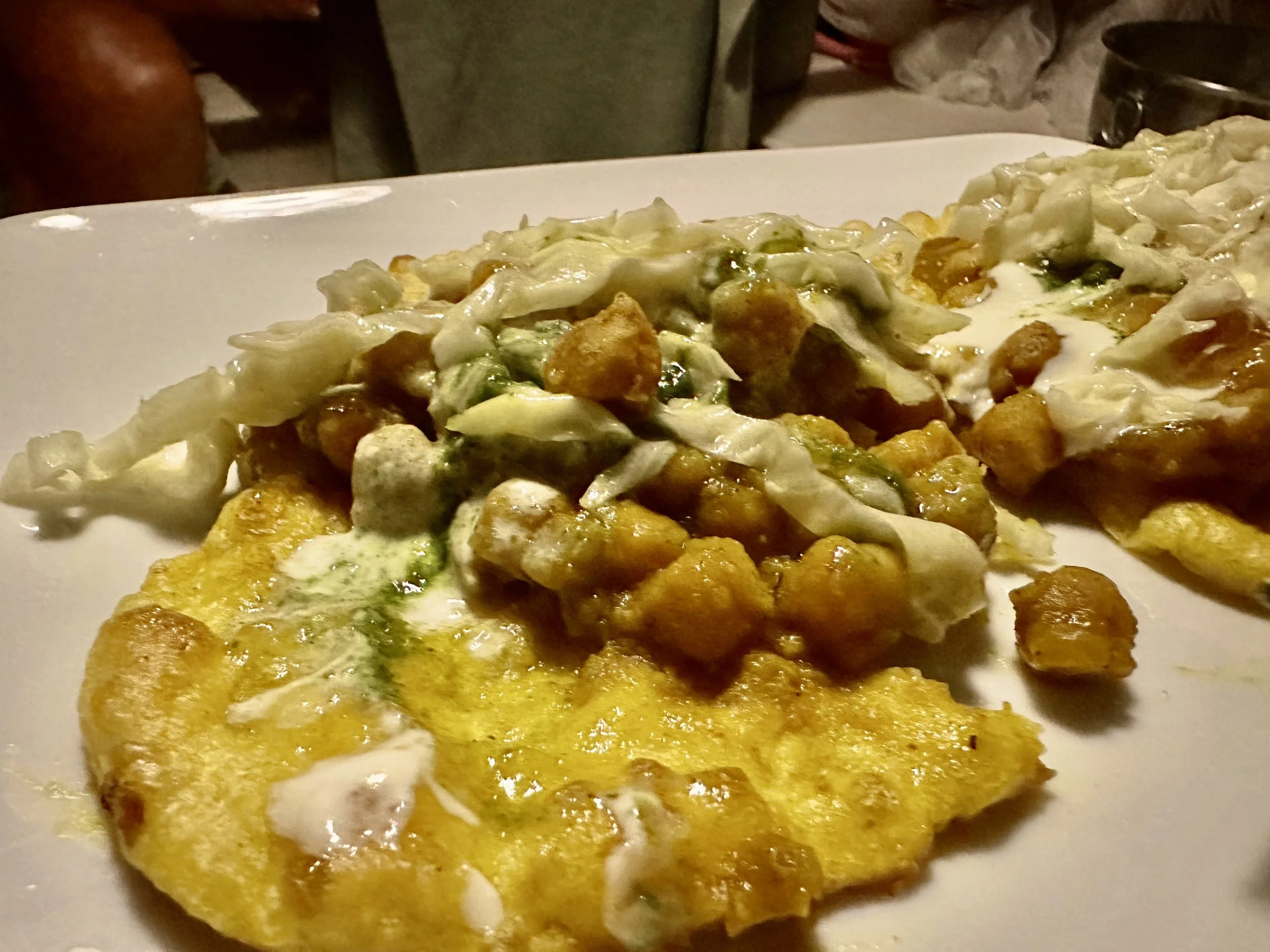
Need chick peas to make doubles! (and so much more)
Question 2: Bang for the buck? Rum! Wine! This far more than beer.
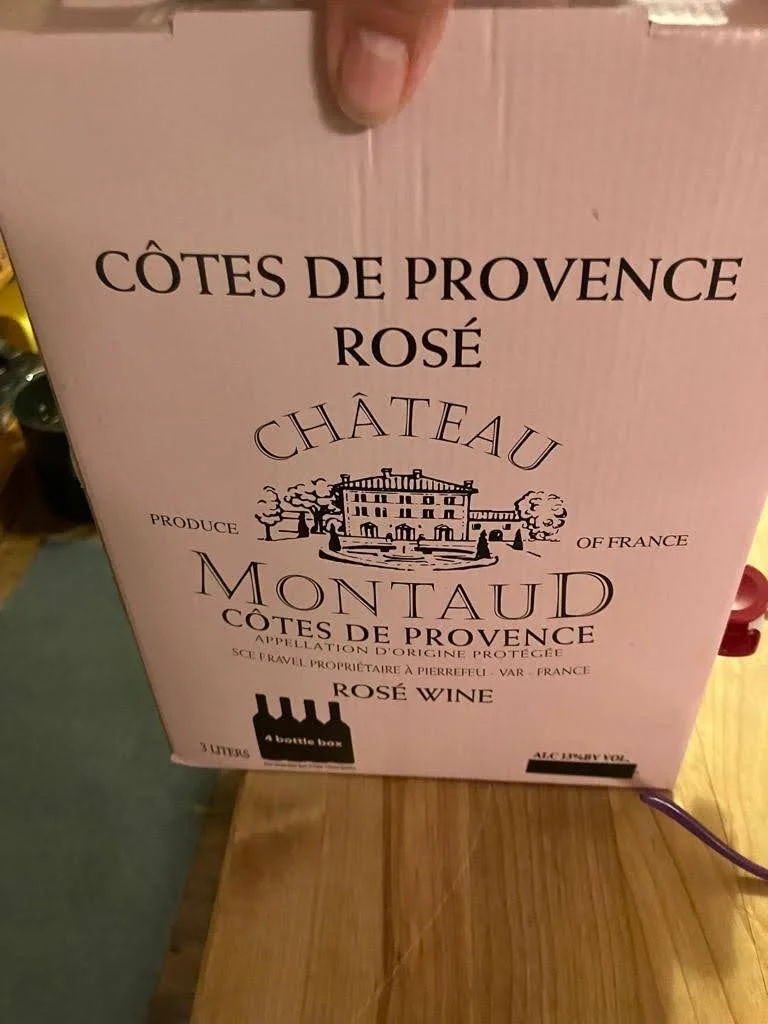
wish I’d bought more . . . US price? $30. FP price? $80.
Question 3: Special stuff? Maple syrup is always on board. Hot sauce. Tonic syrup so we can make rum and tonics, even if sometimes the tonic water winds up being flat because the soda stream is out and we can’t get it refilled without a whole lot of rigamarole . . .
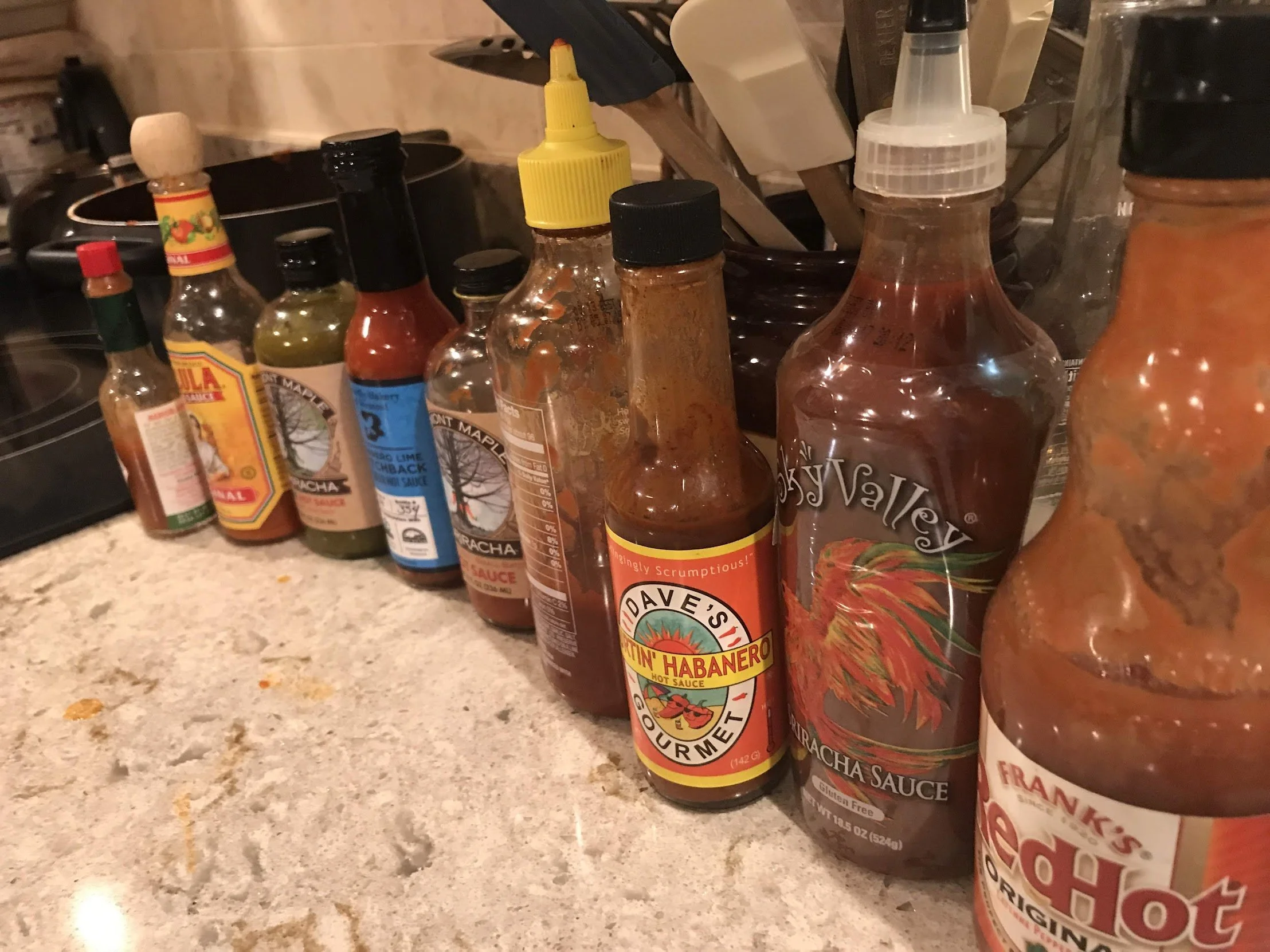
my brother’s enviable hot sauce collection . . .
We laugh about transporting ourselves back to Martinique. I’d have bought 10 boxes of Rhum JM 55; at 30 euros a 3-liter box, we’d be in good shape for Jeremy’s ti-punch for a while. (I saw a 1-liter bottle of the stuff in Tahiti. It was $70. The sirop de canne, however, has been spotted in many magasins even in the Tuamotus. It’s not the $1.50 it was in Martinique, but I paid $4.50 in Tahiti for it. Fine.) There would have been a good taste testing done of the boxed wine before settling on the house version, with a few of the special bottles of bubbly tucked away. Other rum, primarily El Dorado 5 and some sipping bottles of the 12, would have been laid on heavily.
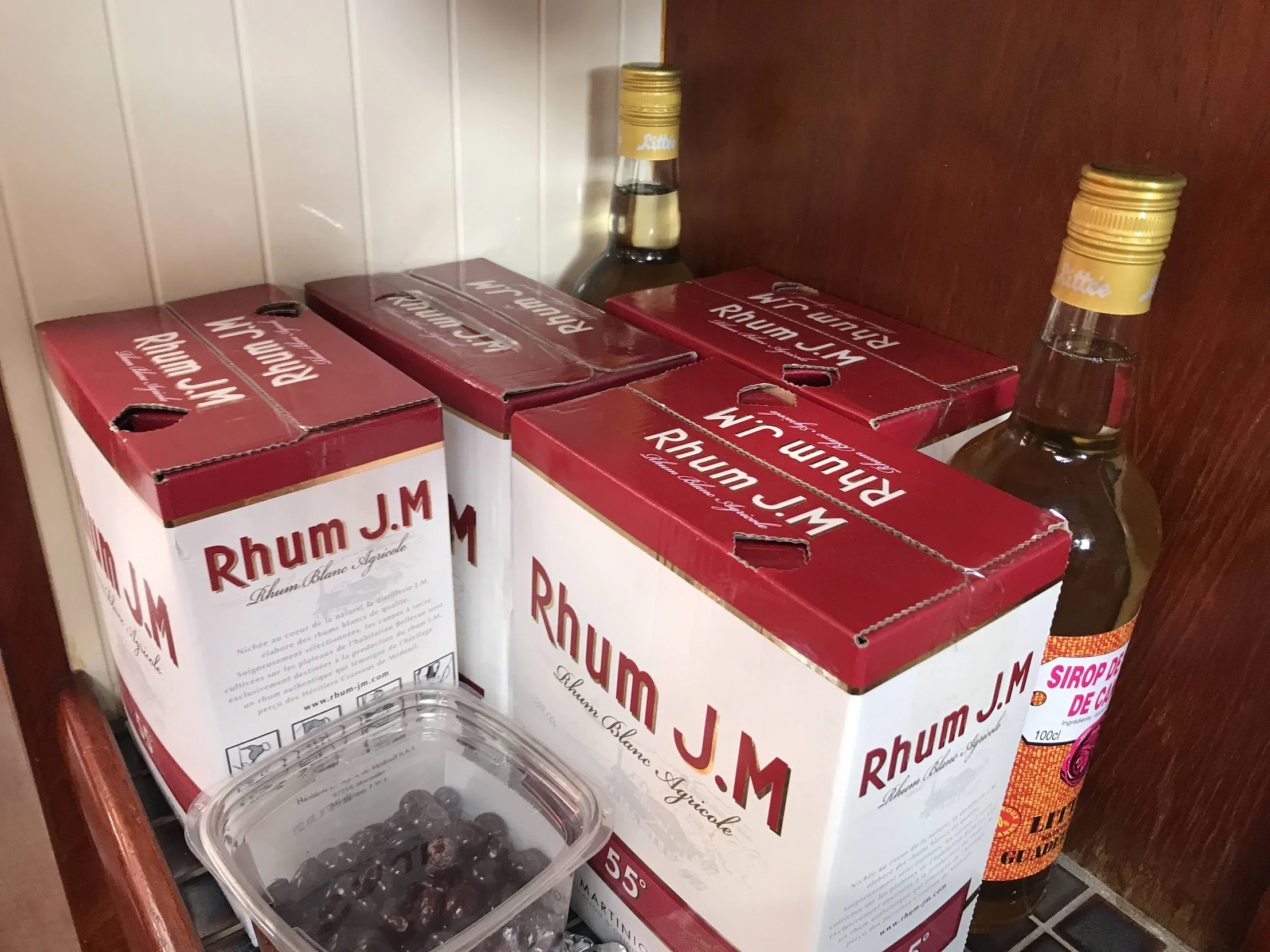
Rhum JM boxes from Martinique
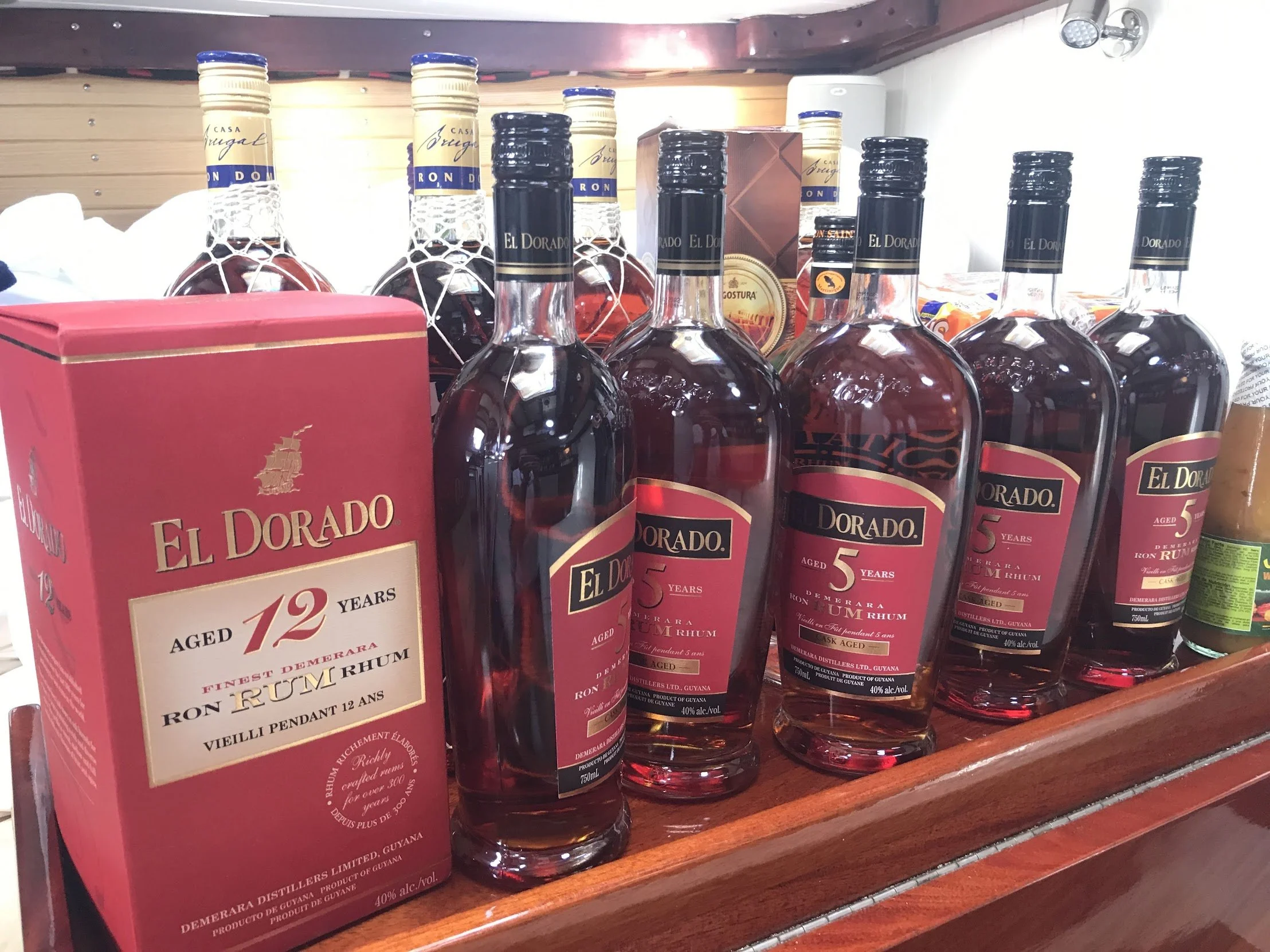
Smart St Martin shopping
Half the fun of cruising in new places is seeing what there is you’ve never tried before. If you miss stuff from home, when you find it (or people bring it in) it’s an extra special boost. We’re enjoying the Hinano beer from here, love the access to Anchor powdered milk and canned butter, and have really started to appreciate pizza made from that emmentaler cheese.
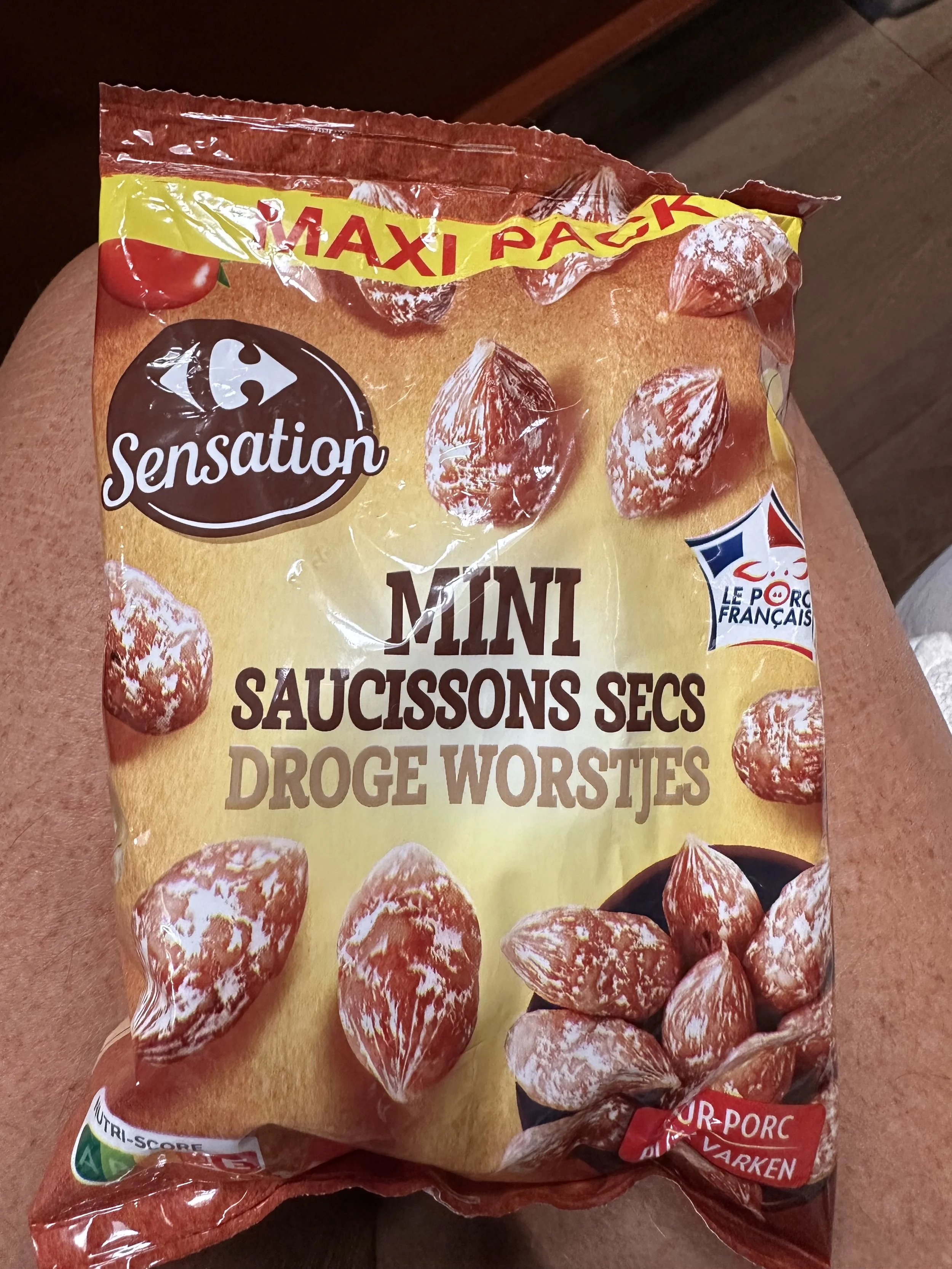
SNACK PACK SAUCISSON??? YES PLEASE!
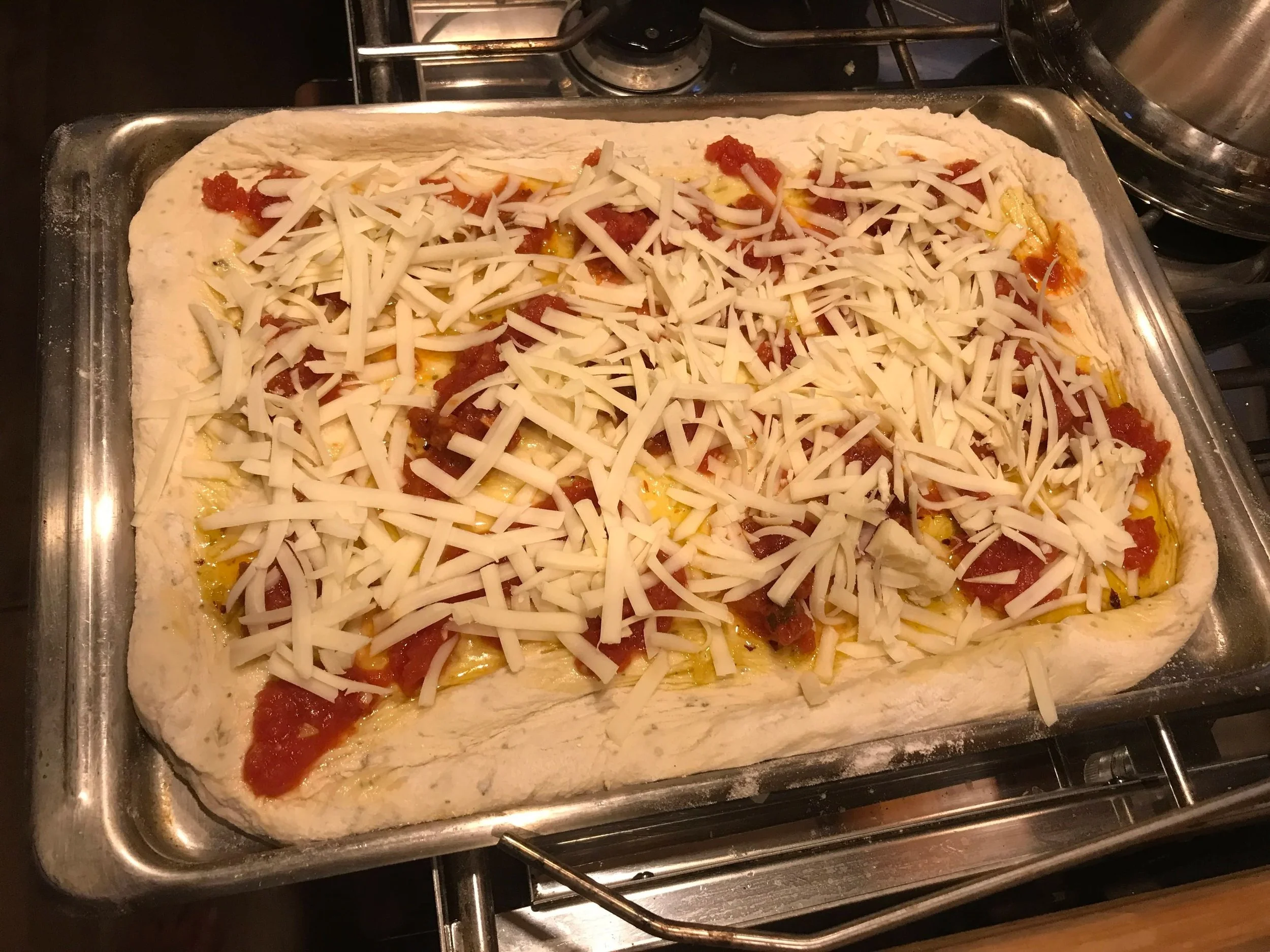
Boatmade pizza is always appreciated!
I wonder what we’ll miss from FP when we get to Tonga? Or what we’ll find that we want to stock up on there!