
Tikehau, the 12th atoll!
Our track in Tikehau is a little amusing. We criss crossed this little atoll (still 10 miles or more from the widest point across) so many times. In the pass and up to the first anchorage. Over to the Garden of Eden. Down to the resort. Move to be closer to In Cahoots for Thanksgiving. Cross to kind of opposite town. Move up the coast a bit. Back to the first anchorage. Shift to the other side of the little island. Over to Eden again. Over to the pass, then to the manta anchorage, and back to the resort area. Then, finally, heading across and out the pass the morning we left. It might be the most anchorages we’ve actually tried out in any atoll.
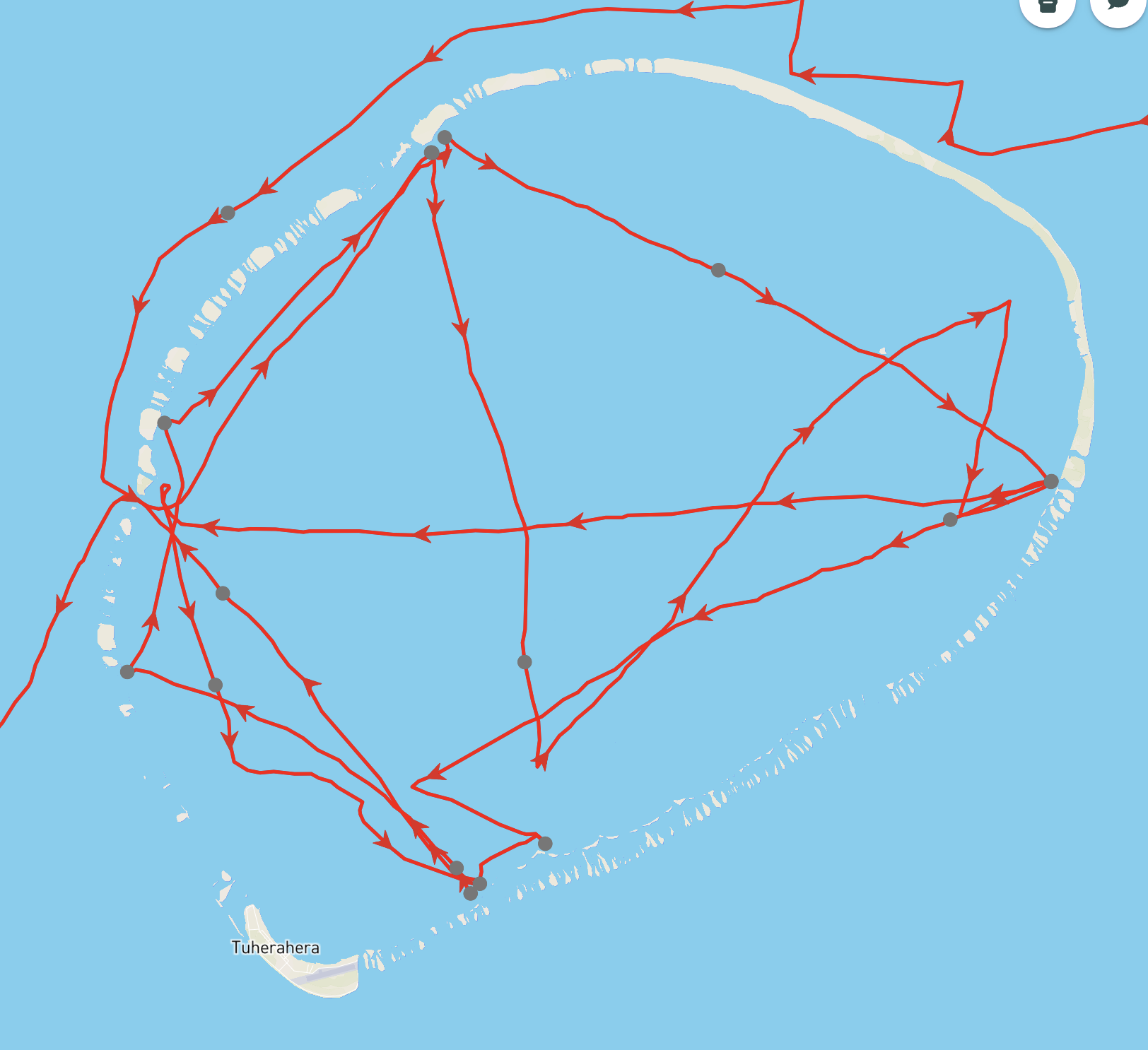
Crazy tracks!
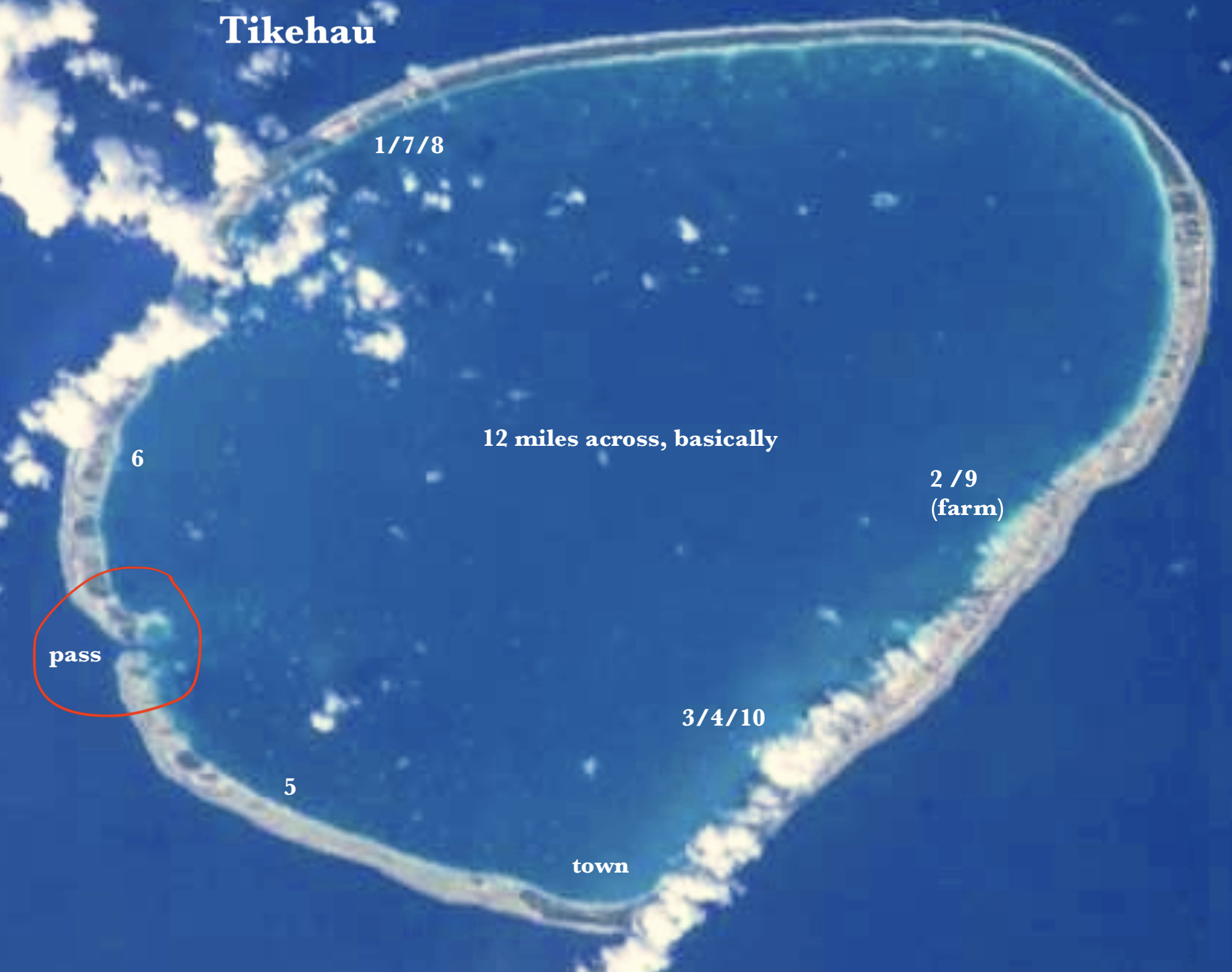
NOAA image
Tikehau is the farthest west atoll with a pass in the Tuamotus. It’s on the cruiser highway lite, maybe a cruiser commuter road. Not an interstate. People pop in here from Rangiroa, but I guess Rangi, being as far north as it is, isn’t exactly on the cruiser interstate to begin with. By the time people get to this end of the archipelago, they’re getting antsy to get to civilization (or maybe this is just me) and bypass. They’re missing out, is all I can say.
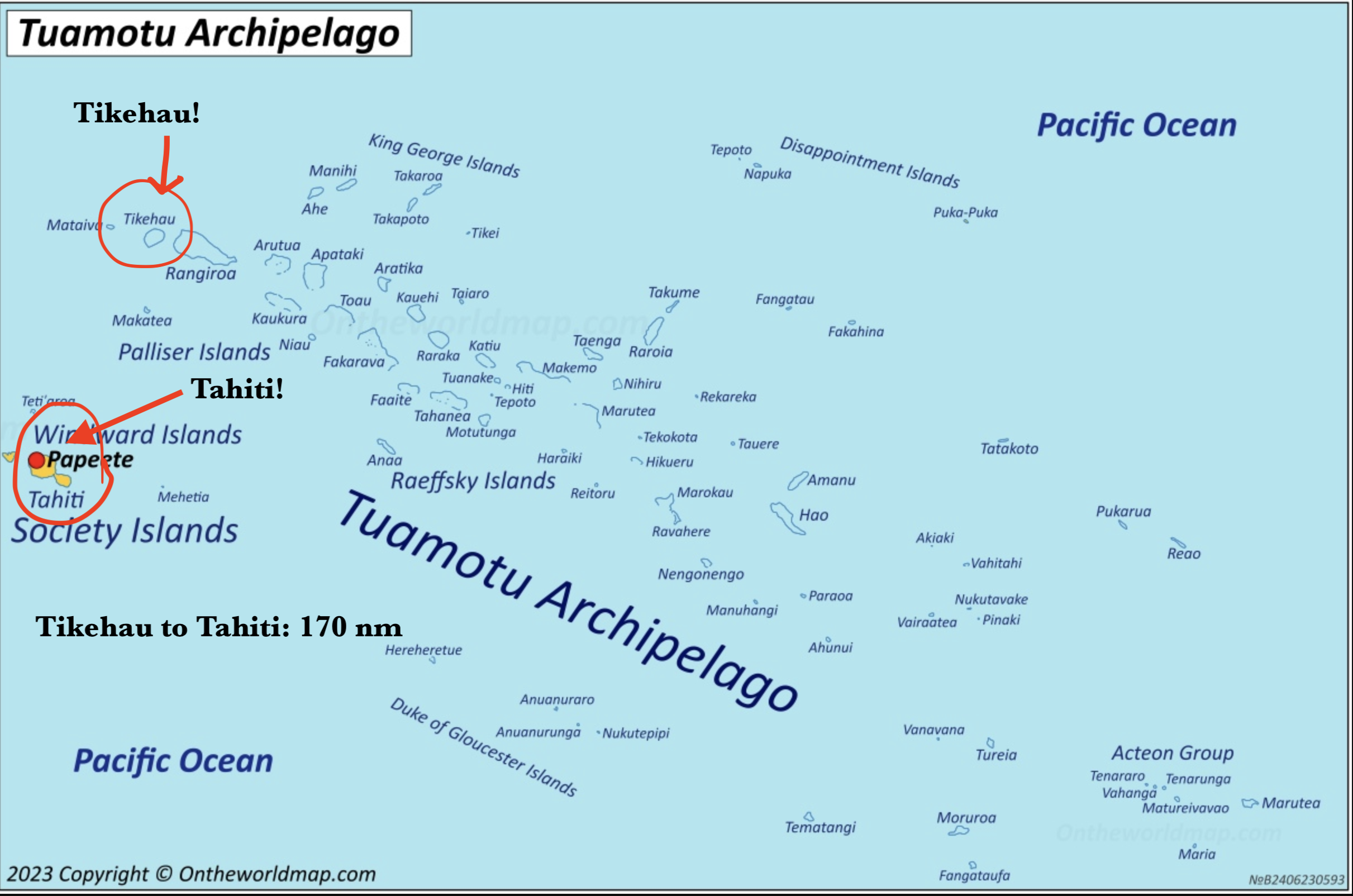
Map from ontheworldmap.com
Tikehau has the kind of laid back vibe we loved in the eastern Tuamotus. Where there are numerous decent anchorages for different winds, enough space even in the popular spots to not feel crowded. A lagoon with bommies (of course) but not the pearl farm detritus adding to the navigational challenges we’ve seen in a lot of the places we’ve been recently.
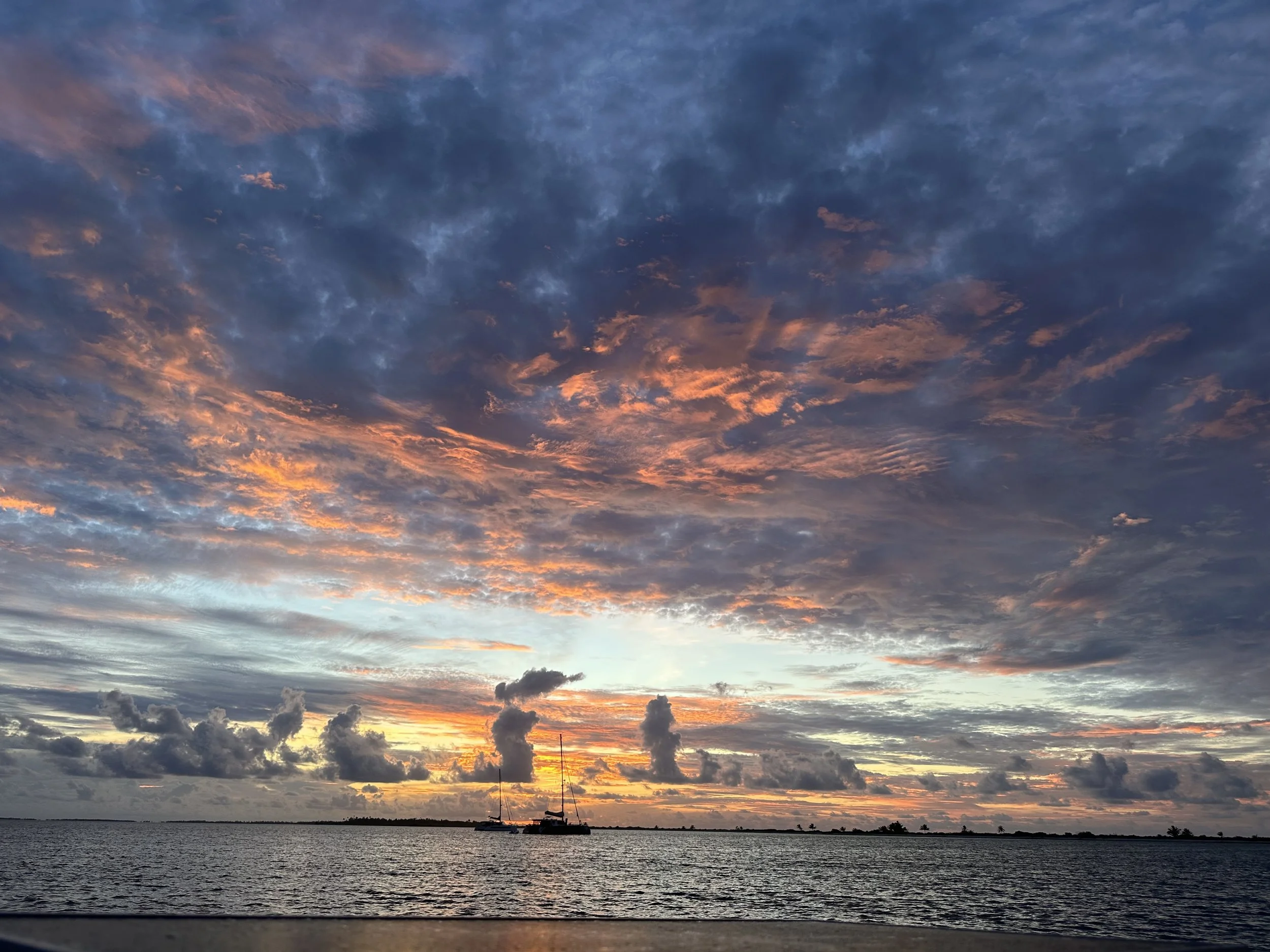
First sunset in Tikehau; that’s In Cahoots and Catalyst in the background
Highlights of our time - and I can’t believe we never even went to town here; we’ve been to the town in every atoll except this one - included Ile D’Eden, Thanksgiving, and manta rays.
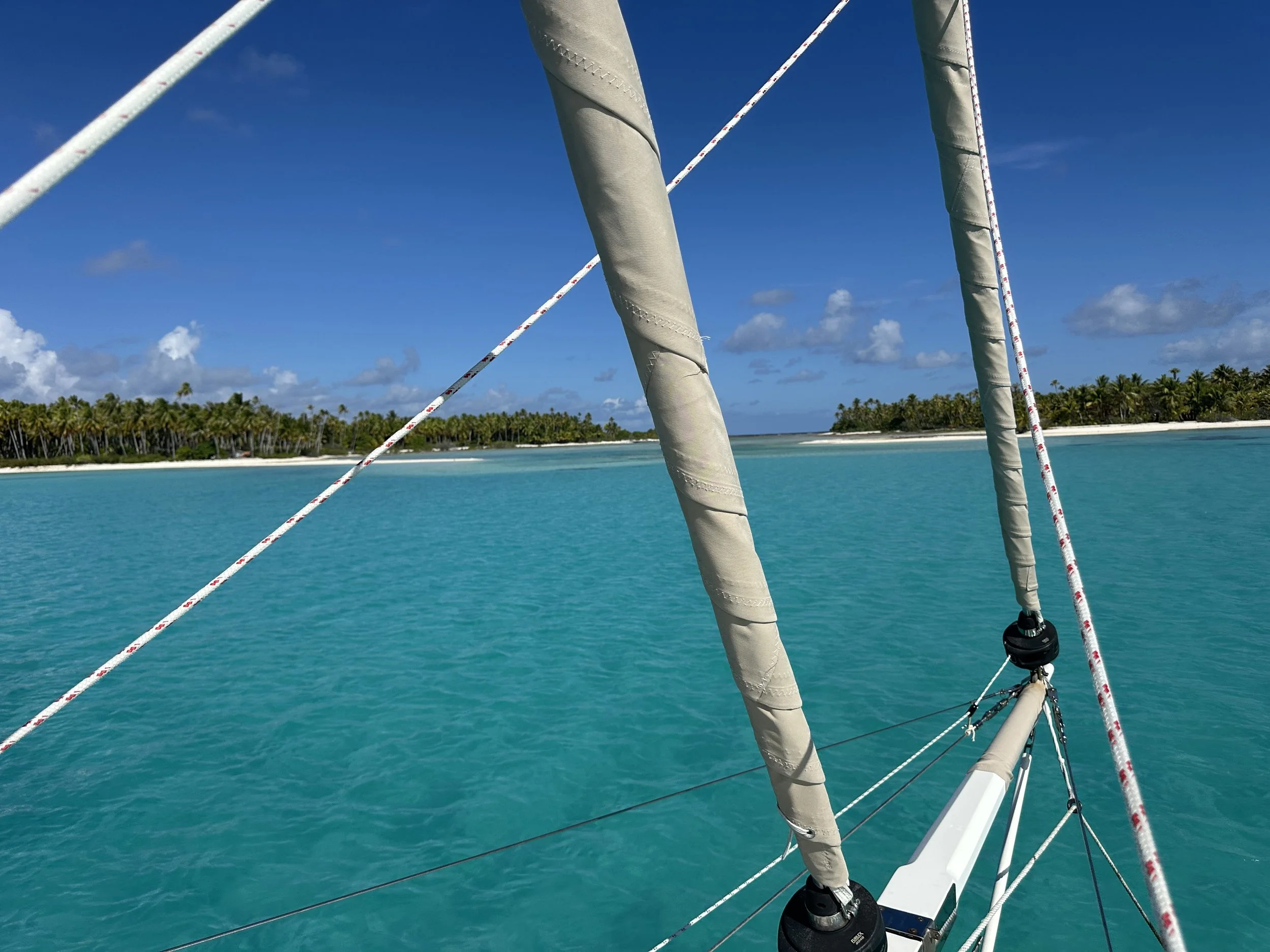
Anchored off of Ile D’Eden
Ile D’Eden
Started in 1993, this incredible farm is a completely self-sufficient endeavor. Take what we saw in Raroia (where they import soil from Tahiti) and multiply it probably 10-fold. The 2 families who live here farm greens, herbs, all manner of fruit trees, pumpkins, eggplants, and more. Vanilla. There are chickens and pigs, the manure of which is used to enrich the soil they manufacture by composting coconut leaves and other organic material. Trenches are dug to keep the coconut tree roots from disrupting other agriculture. There’s a salt production center. All water is caught rain water; all electricity is from solar panels. All we could think of is why don’t other motus in the Tuamotus do this, though we admit it’s easy to think that after 30 years of it being in operation.
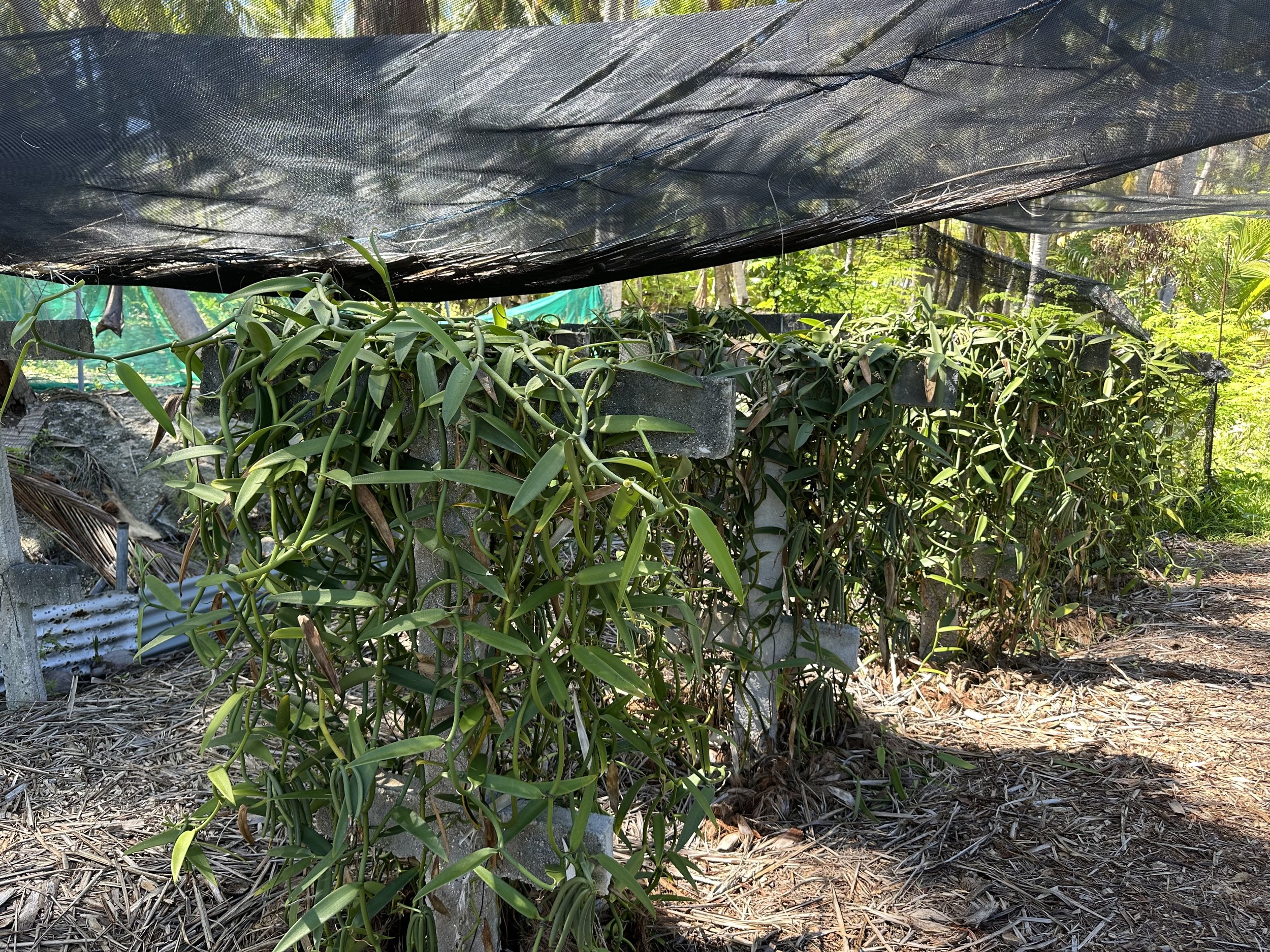
Vanilla beans growing under shade
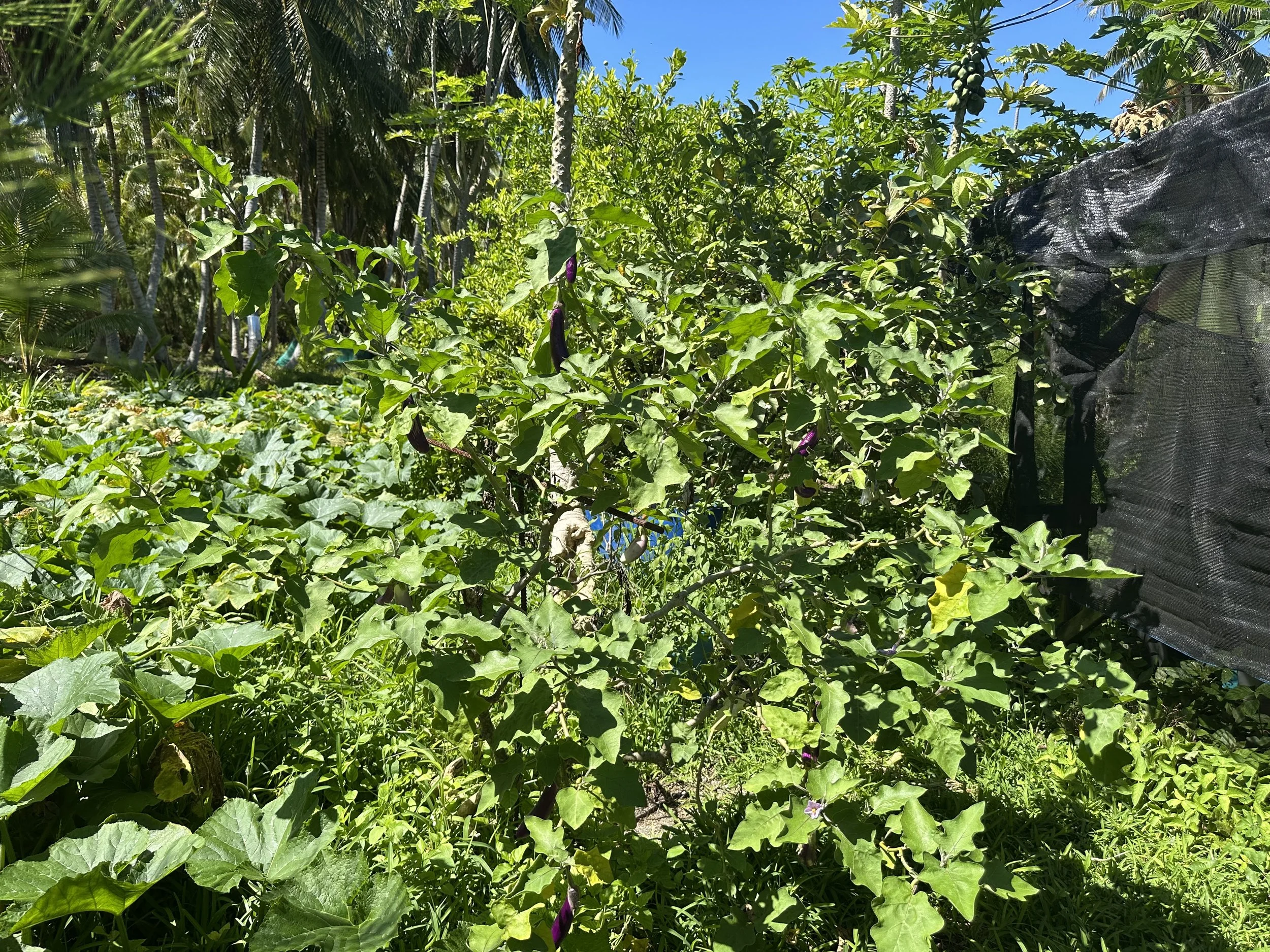
A pumpkin patch, a papaya tree, and bright jeweled eggplants
I’m sorry we didn’t take more photos!
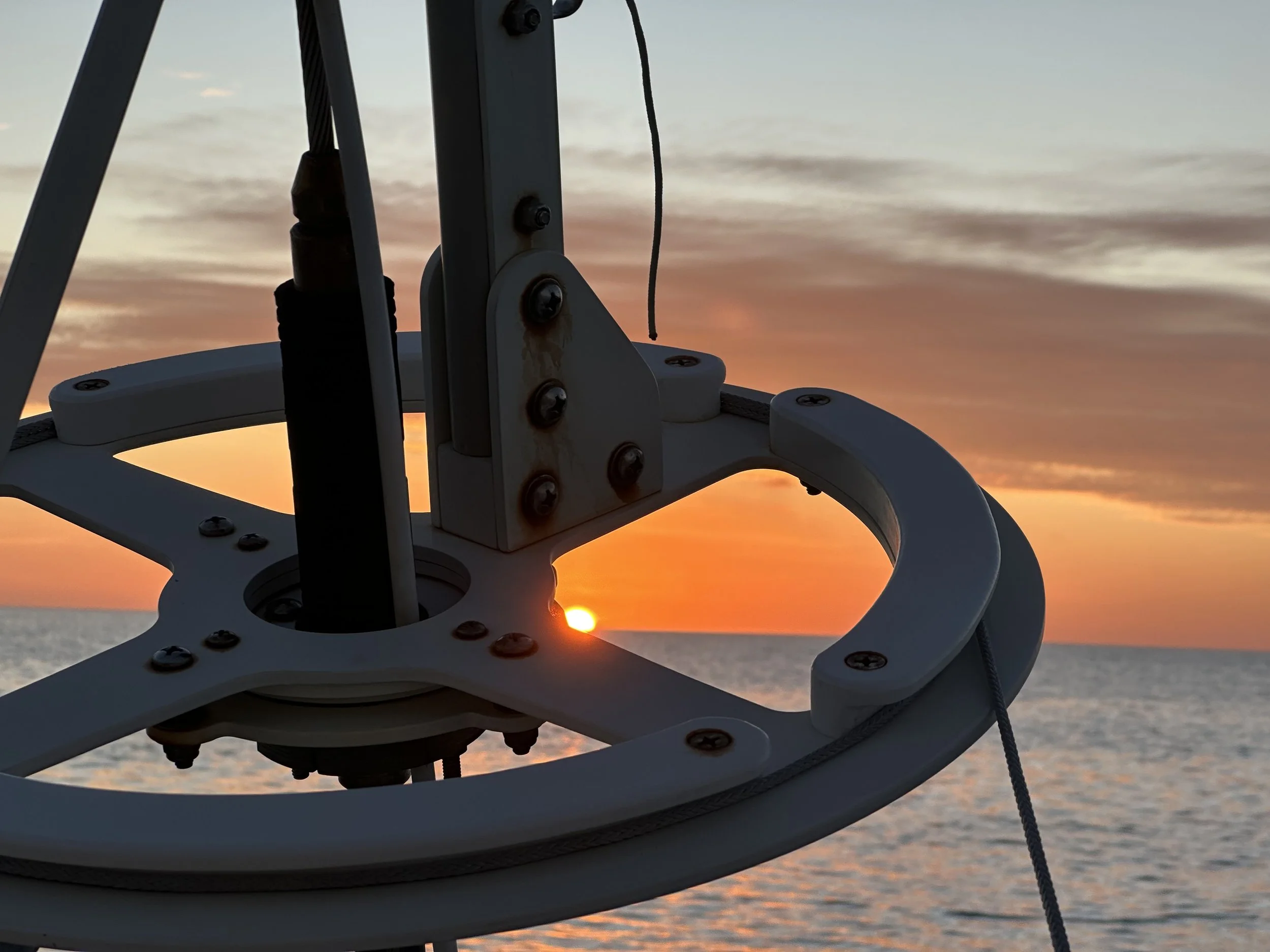
Sunset through Larry, Ile D’Eden anchorage
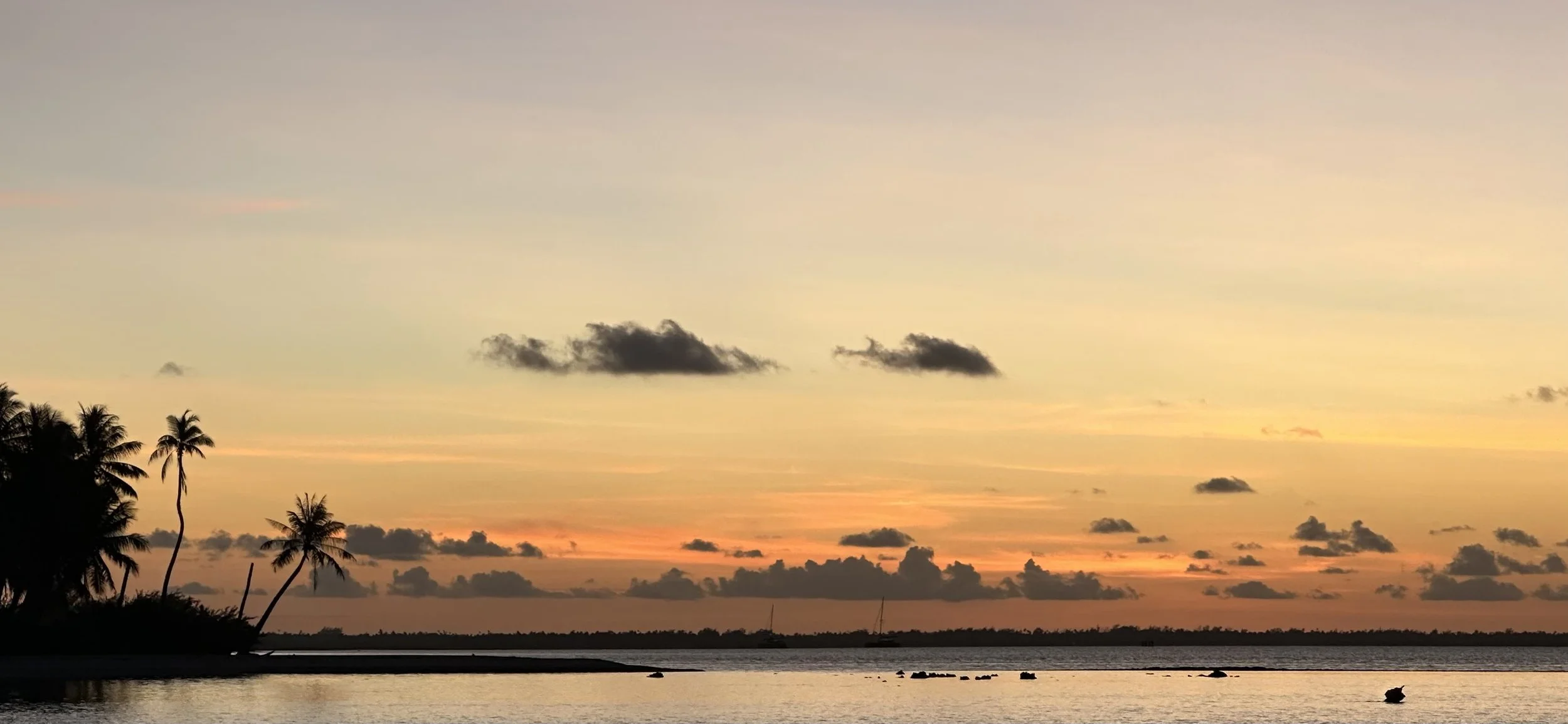
Sometimes we live in a postcard
We first met Michele and Rick on In Cahoots when we tucked into the slip next to them at Shelter Bay Marina, on the Atlantic side of Panama. Since then we’ve hopscotched around, seeing them at Raroia and again in Fakarava. We both have family coming into Tahiti for Christmas (in fact, it’s likely they’ll be on the same flight); we both lamented being so far from family on Thanksgiving. “Let’s celebrate together,” we said, and made a point to be in the same atoll and the same anchorage to make that happen. In true cruiser fashion, the gathering grew to include good friends of theirs (who we’d just missed meeting in Panama) as well as the one other boat in the anchorage, for a 4-boat potluck that was filled with with all kinds of treats of both the eating and the friendship kind.
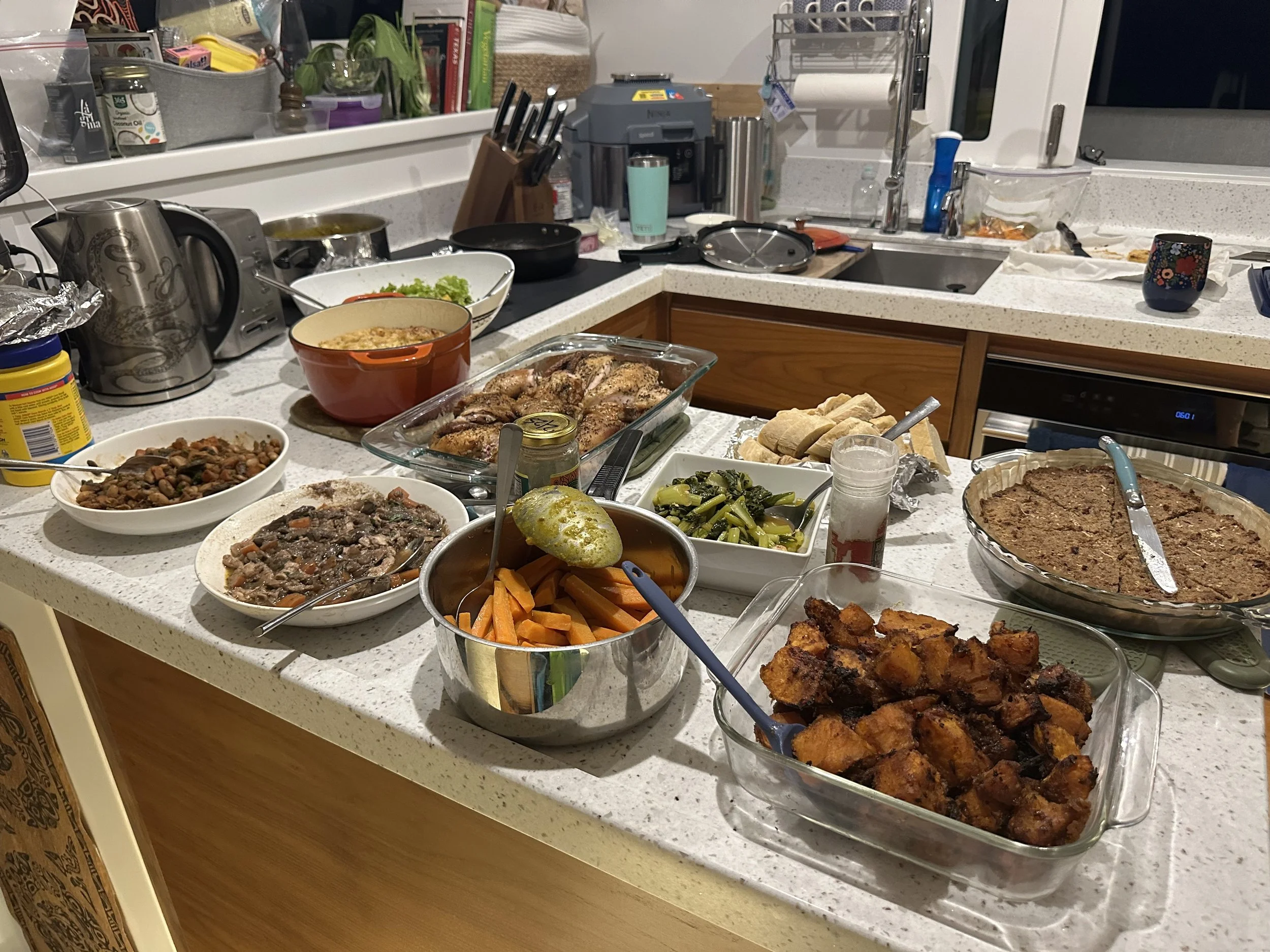
I don’t get tired of being reminded of the abundance we enjoyed!
The Manta Rays
One of the reasons people do get to Tikehau is to go snorkeling with the giant manta rays. There’s a cleaning station off of one of the abandoned pearl farms where they come with enough frequency that tour boats take tourists to swim with them. (A cleaning station is where larger fish go to be cleaned by the smaller fish - like a car wash for marine species - and snorkeling or scuba diving and finding one is incredible. The big critters patiently waiting in line, then staying still for 10 or 15 minutes while smaller fish (or shrimp) dart in and out of mouths and gills.) And though weather didn’t allow us to anchor nearby to snorkel with them, we had a totally different encounter. Here’s what I wrote in a note to a friend. (Sorry there are NO photos!)
Last night was magical. As in, all the serendipity of vastness and pinpoint of perfection. We’d just finished dinner and Jeremy was getting things sorted to start doing the dishes. “Hand me a flashlight,” he said. “There’s something out here.”
The sky was thick with stars, more than we’ve seen in what feels like weeks. Low hanging, endlessly varied brightnesses, the Milky Way casually loping through. Light wind but you could hear . . . something that sounded almost like waves every now and then. The anchor light shone a halo band of diffused light around the boat, and if you knew where to look at least that first time, you could see a dark shadow moving in that band. It came closer.
“There!” Jeremy pointed with the light as the dark shape formed, then disappeared. Hiding from the direct light, possibly. “A manta!” He switched off the flashlight, and now that we knew what we were looking for, it was clear. Black shape with those wings came closer, then barrel rolled to show off the white belly. Again and again, almost so close we could touch it, this beautiful graceful animal that was larger than our cockpit. It somersaulted like that, or barrel rolled, or belly flipped but flipped is the wrong word for the smooth gliding acrobatic movement. We shouted and laughed, encouraging it, wondering if the ray could hear us and was responding, the way dolphins do when they’re playing in the bow wave.
And a second one appeared, smaller than that one, this time on the starboard side of the boat. Jeremy hung the cockpit light low in the triangle of the booomkin, closer to the water, and we could see all the life darting to and fro, Foodstuff for the mantas. It was so thick that every now and then there would be a twinkle of light in the water, phosphorescence that usually needs some kind of irritation to light up just blinking just because, like a marine firefly. The mantas fed at the edges of the light, swooping in and out of the band of glow, first with their black backs showing and then the white underbelly, or the flash of a wing tip. Every now and then they’d break the surface with the tips of their wings.
Reluctantly we tore ourselves away, to do the dishes and prepare for an early bedtime. I could not resist one last look after I’d brushed teeth - and there they were still, feeding and dancing in the starlight and anchor light and it was the most perfect, magical send off to our time in the Tuamotus I could ever have imagined.
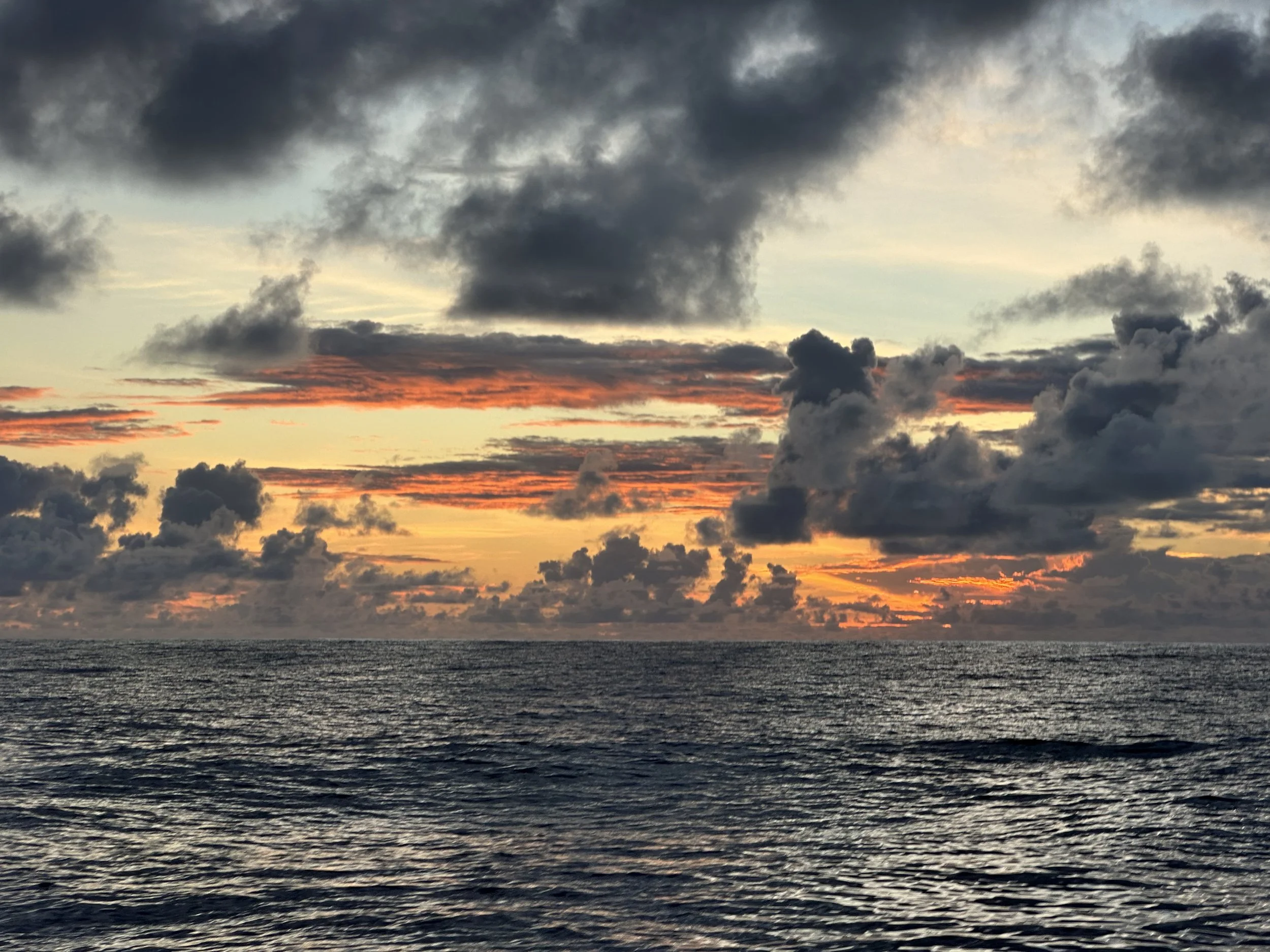
Sunset at sea, heading to Tahiti
By 5:30 the next morning, we were underway for a 36 hour passage to Tahiti.